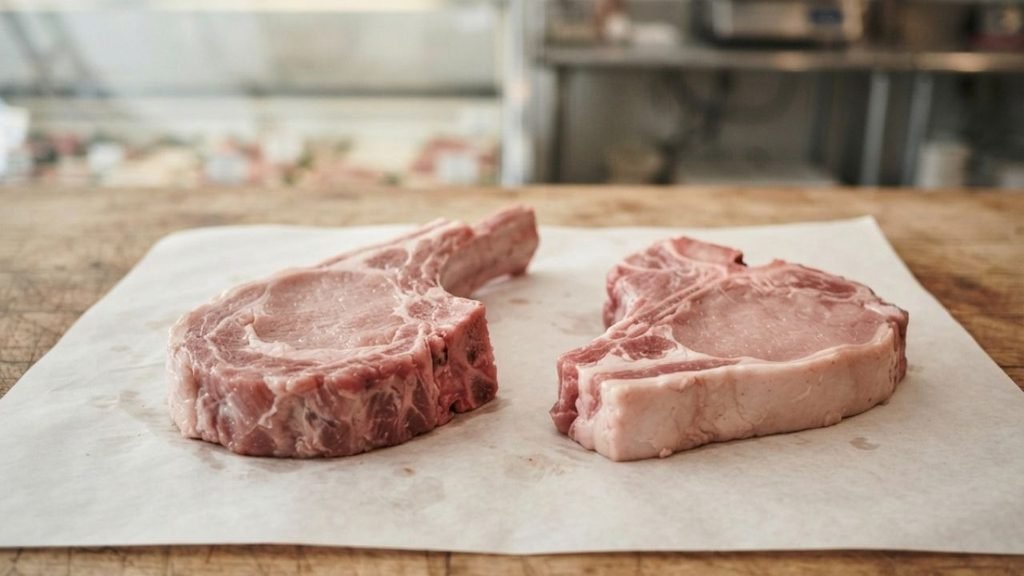
Veal chop are cut from young calves and are known for their tender texture, mild flavor, and pale pink appearance. The most familiar cuts are the rib chop and loin chop, with the rib chop often recognized by its exposed bone and slightly more generous shape. They have long had a place in European cooking, particularly in Italian and French kitchens, where veal has been treated as a relatively delicate meat rather than something that needs heavy seasoning or elaborate treatment. For a weeknight dinner, that simplicity can actually be an advantage. A well-chosen chop already brings tenderness, a clean flavor, and enough character from the bone and surrounding fat to make the plate feel more considered than an ordinary piece of meat.
Choosing a veal chop can be tricky when you are unsure which cut, thickness, or size will cook well on a busy weeknight. This guide helps you choose wisely.
The timing that keeps dinner realistic
| Part | Approx. time |
| Preparation | 10–15 minutes |
| Cooking | 12–18 minutes |
| Resting | 3–5 minutes |
| Total | About 25–40 minutes |
These times are a useful guide rather than a promise. Your chop may be thicker or thinner than the one used here, your pan may hold heat differently, and your preferred level of doneness can change the timing. Think of the clock as a rough planning tool and use the condition of the chop itself to decide when you are ready to move on.
What goes into a good weeknight veal chop
- 2 bone-in veal chops, preferably about 1 to 1½ inches thick
- 1 tablespoon olive oil
- 2 tablespoons unsalted butter
- 2 garlic cloves, lightly crushed
- 1 teaspoon fresh thyme leaves
- ½ teaspoon salt, or to taste
- ¼ teaspoon freshly ground black pepper
- 1 tablespoon lemon juice
- 1 tablespoon chopped fresh parsley
A few easy swaps
| Ingredient | Replacement |
| Fresh thyme | ½ teaspoon dried thyme |
| Fresh parsley | Fresh chives or a small amount of fresh oregano |
| Unsalted butter | Salted butter, with less added salt |
| Lemon juice | A small splash of white wine vinegar |
| Olive oil | Avocado oil or another neutral cooking oil |
If you can find fresh thyme and parsley, they are worth using. Their flavor is subtle enough to support the veal rather than cover it.
Before the pan gets involved
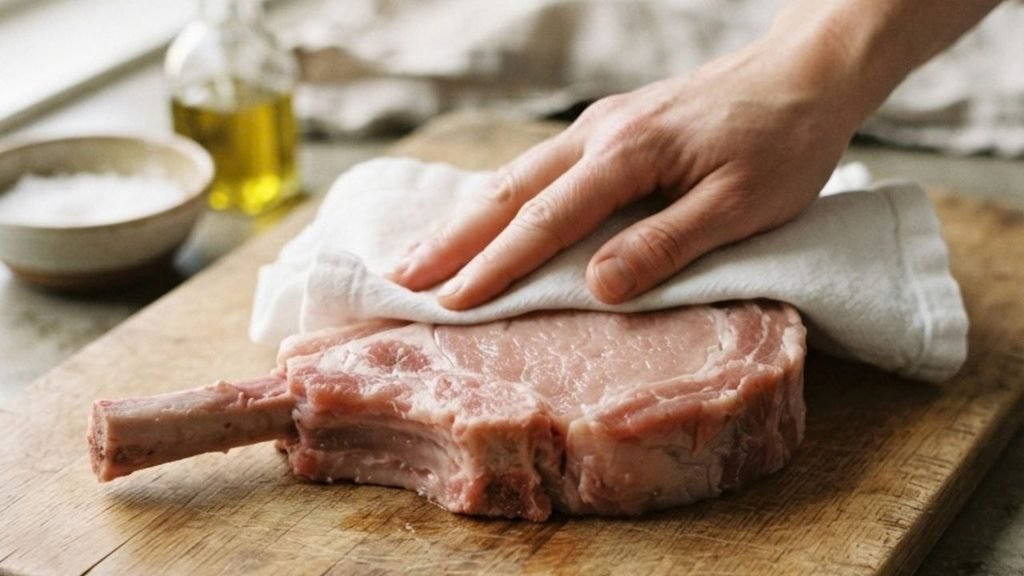
Take the chops out of the refrigerator and give them a little time to lose their deep chill while you organize the other ingredients. Patting the surface dry is also useful because a wet surface makes it harder to develop the browned exterior that gives the chop much of its character.
Season both sides with salt and pepper. Do not bury the meat under seasoning. Veal has a relatively mild flavor, and one of the pleasures of a good chop is being able to taste the meat itself.
Directions
1. Get the pan properly hot
Place a heavy skillet over medium-high heat and let it heat for a few minutes. Add the olive oil once the pan is hot enough to cook the surface of the chop immediately.
The aim is a firm, even sear rather than aggressive heat that burns the outside before the center has had a chance to cook.
2. Give the chops their color
Place the veal chops in the pan without crowding them. Cook until the first side develops a deep golden-brown surface, then turn them over.
The exact time will depend on thickness, so watch the surface rather than treating the minutes as a fixed rule. A thicker chop will naturally need more time than a thin one.
3. Add the ingredients that carry the aroma
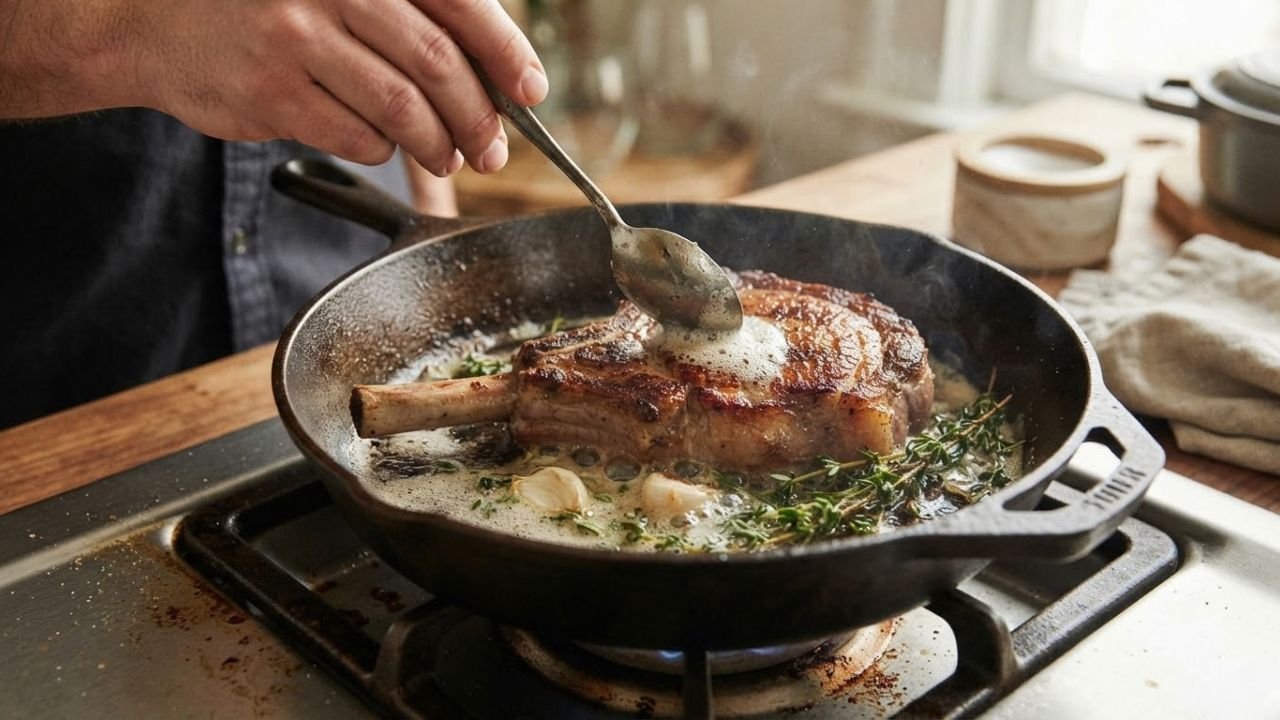
Lower the heat and add the butter, crushed garlic and thyme. As the butter melts, spoon it over the chops several times.
This is where the simple ingredients begin to make sense. The butter adds richness, the garlic gives the pan a savory edge, and thyme brings a fresh herbal note without overpowering the veal.
4. Check the center
Continue cooking until the thickest part reaches your preferred level of doneness. For a food-safety benchmark, veal chops are cooked to 145°F / 63°C, followed by a short rest. For more detail on accurate temperature checking, see the USDA’s guidance on using a food thermometer.
A thermometer is much more reliable than guessing from the color of the outside.
5. Let the meat settle
Transfer the chops to a plate and allow them to rest for a few minutes. Finish with the lemon juice and parsley before serving.
The short rest matters because the center of the meat is still settling after cooking. Cutting into it immediately can release more of the juices onto the plate rather than keeping them in the chop.
What belongs beside a veal chop
Veal does not need a crowded plate. Something crisp and green works well, particularly roasted vegetables, sautéed greens or a simple salad with some acidity. Potatoes are an obvious companion, but they can make the meal feel heavier, so a sharp lemon dressing or a light vegetable side helps keep the plate balanced.
If the chop is particularly thick and substantial, keep the sides restrained. The bone and browned exterior already give the dish visual weight.
If there are leftovers, keep them useful
Cooked veal can generally be refrigerated and used within 2–3 days, depending on your storage conditions and how quickly the leftovers were chilled. That is a practical window, not a guarantee, so use your own judgment about freshness.
For reheating, gentler heat is usually kinder to a veal chop than blasting it until it is piping hot throughout. The meat is already cooked, so the goal is simply to warm it without turning the center dry.
If the leftovers have become noticeably dry, slicing them thinly and using them with a salad, sandwich or grain-based lunch can work better than trying to recreate the original dinner.
The mistakes that quietly ruin a good chop
Buying a chop that is too thin
A thin chop gives you very little room between a browned exterior and an overcooked center. If you want a forgiving weeknight dinner, choose something with enough thickness to handle the heat.
Choosing by appearance alone
A large bone and an impressive shape can make a chop look special, but they do not tell you everything. Thickness, freshness and the actual cut matter more than presentation.
Using the highest heat from beginning to end
High heat is useful for developing color, but leaving the pan aggressively hot throughout can make the exterior too dark while the inside catches up.
Moving the meat constantly
A chop needs uninterrupted contact with the pan to develop a proper crust. Turning it repeatedly does not make it cook better.
Guessing the center
This is perhaps the easiest mistake to avoid. A meat thermometer gives you information that the outside of the chop simply cannot provide.
Covering the meat with too much seasoning
Veal has a delicate flavor. Strong sauces and heavy spice blends can make the chop taste like whatever was put on it rather than veal.
FAQ’s
1. Is a rib chop better than a loin chop?
Not necessarily. Rib chops are more dramatic and often richer-looking, while loin chops are practical and versatile. The better choice depends on what you want from the meal.
2. How thick should a veal chop be?
Around 1 to 1 1⁄2 inches is a useful range for a weeknight preparation because it gives you enough thickness to develop color without making the center difficult to manage.
3. Why does the veal look so pale?
Veal comes from younger animals, so its meat is naturally lighter in color than typical beef. Pale pink is therefore not automatically a sign of poor quality.
4. Can you use boneless veal chops?
Yes. They can be convenient and cook quickly, but they generally give you less of the visual character associated with a traditional bone-in chop.
5. Does the bone make the chop taste better?
The bone contributes to the character and presentation of the cut, but it is not a guarantee of better flavor. The quality and cooking of the meat itself remain more important.
6. What is the safest way to judge when it is done?
Use a thermometer in the thickest part of the meat rather than relying entirely on cooking time or appearance.
The better weeknight choice
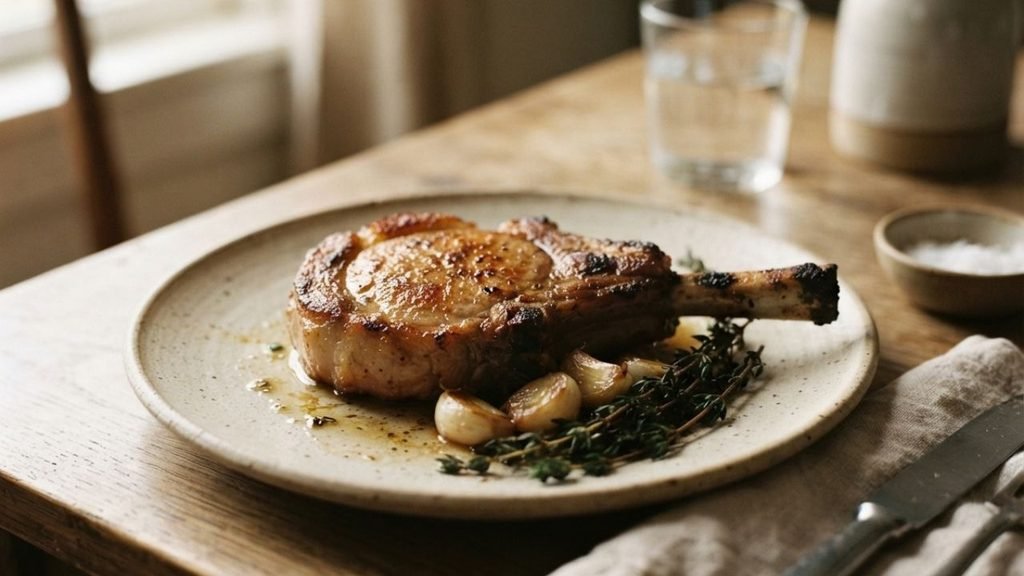
Choosing veal well is less about finding the fanciest chop in the case and more about buying one that suits the dinner you actually have time to make. A thick, evenly cut loin or rib chop gives you more control, and that control is what makes a weeknight meal easier.
The best chop is therefore not necessarily the biggest, most expensive or most heavily trimmed one. It is the one that gives you enough tenderness, enough thickness and enough room for a little imperfection. Once you know what those details look like, the choice becomes much simpler — and a veal chop stops being an intimidating purchase and becomes a very manageable dinner.