Sweet peppers are vegetables most people know without giving them much thought. Usually called bell peppers, they come in green, red, yellow and orange varieties and belong to the Capsicum family. Unlike hot peppers, they are generally mild. They have become a familiar part of everyday cooking because they bring sweetness, color and freshness to ordinary meals without demanding much attention.
The real trouble starts when you have several peppers in the fridge and keep making the same thing with them. These nine recipes give you different ways to use them before they are forgotten in the vegetable drawer.
The timing before you start
| Prep time | Cook time | Total time |
| 10–15 minutes | 20–30 minutes | 30–45 minutes |
These times are a useful guide rather than a fixed promise. Your prep and cooking time can be shorter or longer depending on how quickly you work, the size of your peppers and how your stove or oven behaves.
What you’ll need
- 3 sweet bell peppers
- 1 medium onion
- 2 cloves garlic
- 2 tablespoons olive oil
- 1 cup cooked chickpeas
- 1 cup cooked rice
- 2 medium tomatoes
- ½ teaspoon paprika
- ½ teaspoon ground cumin
- Salt, as needed
- Black pepper, as needed
- 1 tablespoon lemon juice
- 2 tablespoons chopped fresh parsley
- ¼ cup crumbled feta
- ¼ cup toasted walnuts
- 2 eggs
- 1 tablespoon soy sauce
- 1 teaspoon grated fresh ginger
- 1 tablespoon rice vinegar
- 4 slices crusty bread
Easy swaps when the pantry says otherwise
| Ingredient | Simple replacement |
| Feta | Goat cheese or crumbled white cheese |
| Chickpeas | White beans or cooked lentils |
| Fresh parsley | Fresh coriander or basil |
| Rice vinegar | A small splash of lemon juice or white vinegar |
| Walnuts | Almonds or cashews |
| Fresh ginger | A small pinch of ground ginger |
Directions
The nine ideas below use the same basic vegetable in noticeably different ways. The useful part is not following every recipe exactly, but noticing how the texture and flavor of sweet peppers change when you give them more or less cooking time.
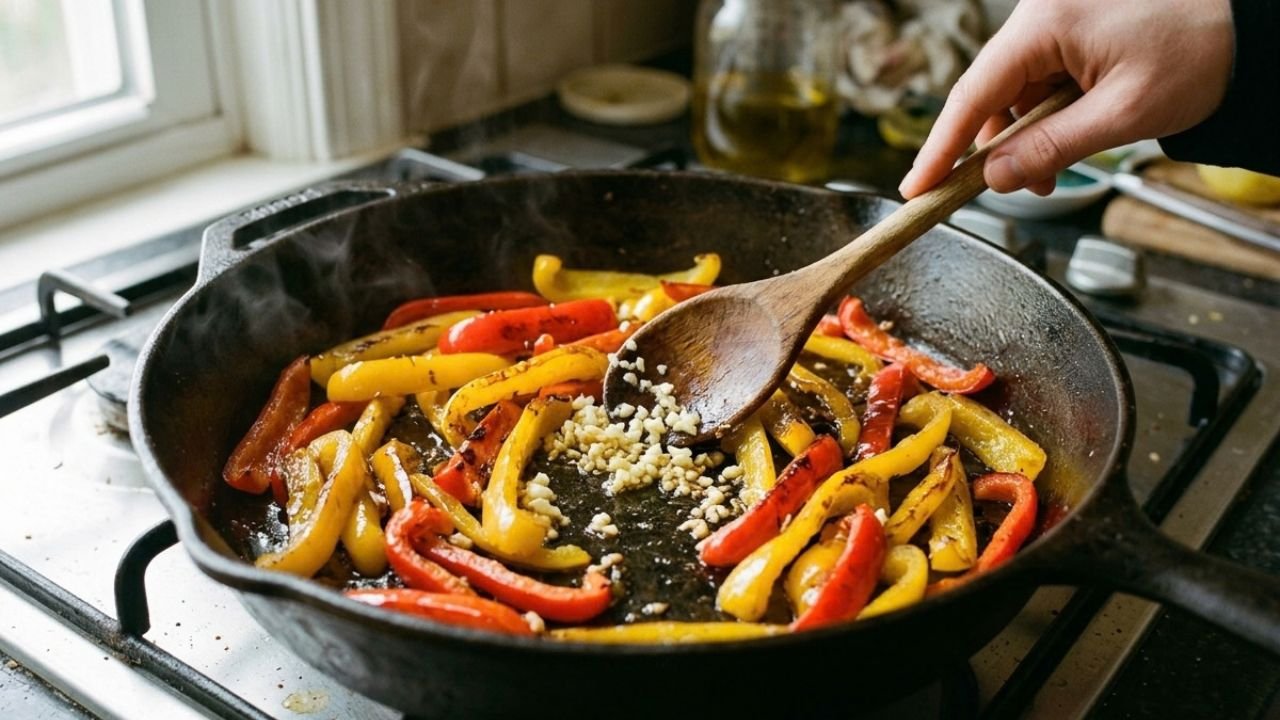
1. Garlic Sweet Peppers for Toast
Slice two peppers into thin strips and cook them with olive oil over medium heat until soft. Add minced garlic during the final couple of minutes so it becomes fragrant without burning.
Season with salt and black pepper, then spoon the peppers over toasted bread. A fried egg on top turns this simple side into a quick breakfast or light dinner.
2. Roasted Pepper Pasta
Halve two red peppers and roast them until the skins blister and the flesh becomes tender. Let them cool slightly, remove the skins and blend the flesh with a little olive oil, garlic, salt and black pepper.
Toss the mixture with hot pasta and finish with feta or Parmesan. The roasted pepper becomes the sauce rather than sitting in the background.
3. Sweet Pepper and Egg Skillet
Slice one onion and two peppers, then cook them slowly until tender. Add chopped tomatoes, cumin and paprika and let the mixture reduce slightly.
Make two small spaces in the mixture and crack in the eggs. Cover the pan until the whites are set but the yolks are still soft, then finish with parsley.
4. Pepper and Chickpea Rice
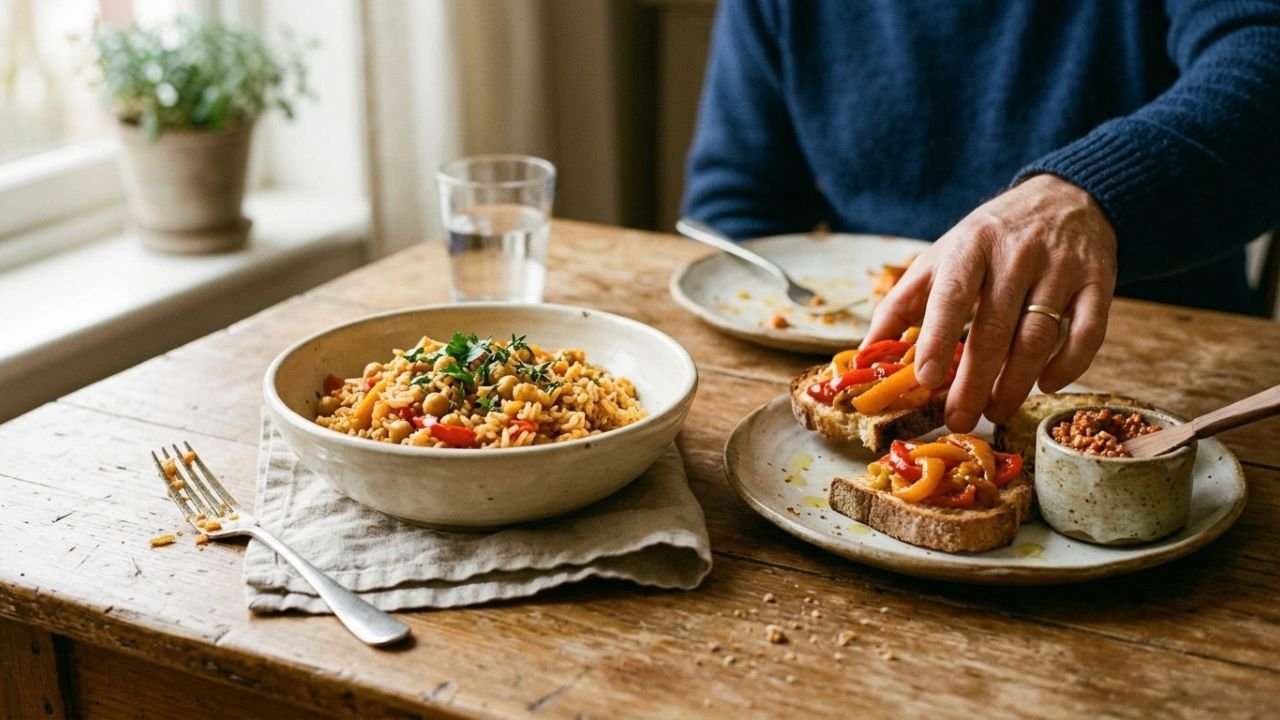
Cook chopped onion and peppers in olive oil until softened. Stir in cumin and paprika, followed by cooked rice and chickpeas.
Cook everything together for several minutes so the flavors settle into the rice. Finish with lemon juice and parsley for some freshness.
5. Charred Pepper and Walnut Spread
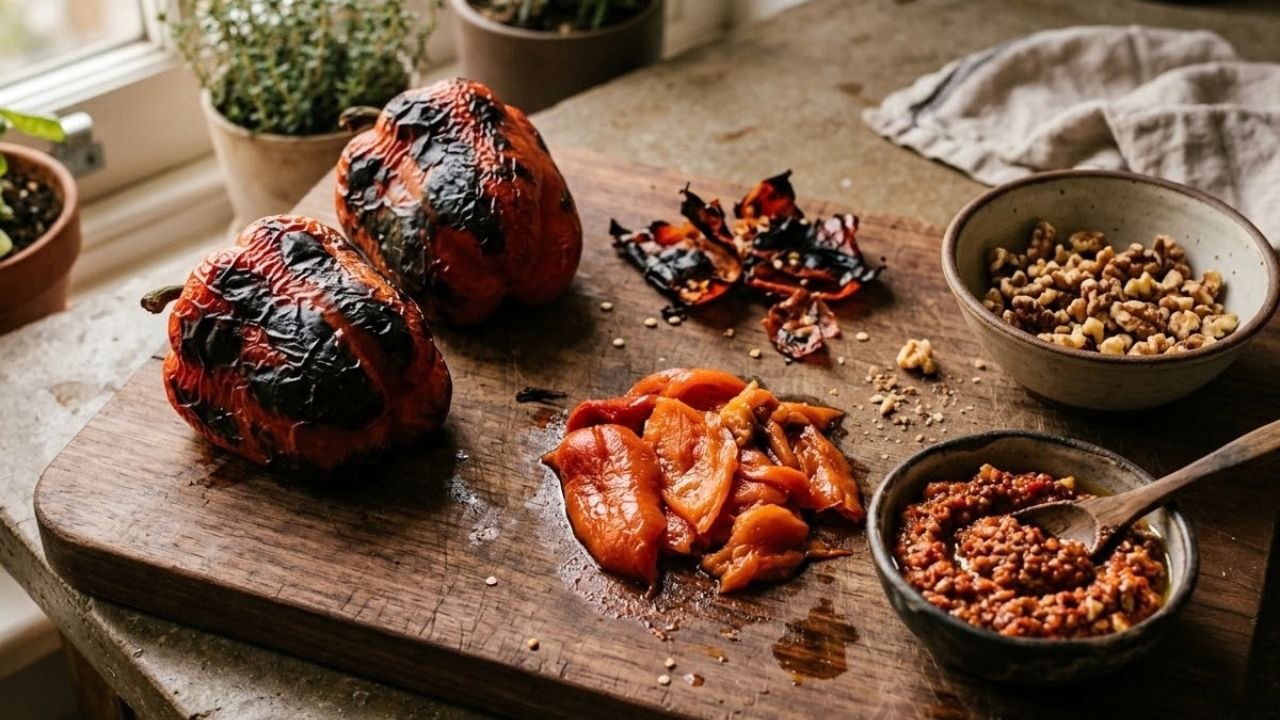
Roast or grill red peppers until their skins are heavily blistered. Once cool enough to handle, remove the skins and seeds.
Blend the pepper flesh with toasted walnuts, garlic, olive oil, lemon juice and a little salt. Keep some texture rather than turning it into a completely smooth paste. It works particularly well on toast.
6. Quick Pepper Stir-Fry
Cut yellow or orange peppers into fairly wide strips. Stir-fry them over high heat for only a few minutes so they soften slightly while retaining some crunch.
Add ginger, soy sauce and a splash of rice vinegar near the end. Cashews or sliced spring onions make a useful addition if you have them.
7. Stuffed Sweet Peppers
Halve large peppers and remove the seeds. Mix cooked rice with feta, parsley, black pepper and chopped walnuts.
Fill the pepper halves and bake until the peppers are tender and the tops of the filling have picked up some color. This is an especially useful recipe for using leftover rice rather than cooking a separate batch.
8. Sheet-Pan Peppers with Chicken
Arrange chicken thighs with thick strips of red and yellow peppers, onion and tomatoes on a baking tray. Season with olive oil, garlic, paprika, salt and black pepper.
Roast until the chicken is fully cooked and the peppers are soft around the edges. Keep the pepper pieces fairly large so they do not disappear before the chicken is ready.
9. Slow-Cooked Peppers on Toast
Slice several peppers and an onion into thin strips. Cook them gently in olive oil until very soft and deeply colored, stirring occasionally.
Add a small splash of vinegar at the end to balance their sweetness. Serve over toasted bread with goat cheese, feta or a fried egg.
Make them part of the meal
Sweet pepper dishes are easy to serve because they can move between different parts of a meal. The garlic peppers work beside grilled meat or eggs, roasted pepper pasta can stand on its own, and the chickpea rice needs little more than a fresh salad alongside it.
For something lighter, serve the charred pepper spread with cucumber, tomatoes and bread. The stuffed peppers are substantial enough to work as a main dish, particularly with a simple yogurt or herb salad.
Keeping leftovers useful
Cooked pepper dishes can generally be kept covered in the refrigerator and used over the next couple of days, although the exact time depends on how quickly the food was cooled, how cold your refrigerator stays and how it was stored. For a more precise guide to handling and storing leftovers, see the USDA’s guidance on safe leftover storage
, which explains recommended refrigeration times and cooling practices.
For reheating, use gentle heat and add a small splash of water if the dish has dried out. Again, the reheating time is not fixed; smaller portions usually warm more quickly than a full container. Dishes intended to stay crisp, such as the stir-fried peppers, are better eaten soon rather than expecting them to have exactly the same texture later.
Small mistakes that change the result
Crowding the pan. Too many peppers in a small pan can make them steam instead of taking on the color you want. Cutting everything too thin. Thin strips can become soft very quickly, especially in the oven.
Adding garlic too early. Garlic can burn while the peppers are still cooking, leaving a bitter taste. Overcooking stir-fried peppers. They are supposed to retain some bite in a quick stir-fry.
Forgetting acidity. Lemon juice or vinegar can make slow-cooked peppers taste less heavy by balancing their natural sweetness.
Using green peppers when you want maximum sweetness. Green peppers generally have a sharper, more vegetal flavor than fully colored red, yellow or orange peppers.
FAQ’s
1. Can I use different colors of peppers together?
Yes. The main difference is flavor rather than whether they can cook together. Red, yellow and orange peppers tend to bring more sweetness, while green peppers give a stronger vegetal note.
2. Should I peel roasted peppers?
You can, especially when the skin has blistered heavily. Peeling gives a smoother texture, but it is not necessary for every recipe.
3. Can frozen peppers work?
Yes, particularly in cooked dishes such as pasta sauces, rice dishes and stews. They will usually be softer than fresh peppers, so they are less suitable when you specifically want crunch.
4. How do I stop peppers from becoming watery?
Avoid overcrowding the pan and use enough heat to let excess moisture evaporate. A wide cooking surface also helps.
5. Which sweet pepper is the sweetest?
Red peppers are generally among the sweeter common bell peppers because they are allowed to mature longer on the plant. Individual varieties can still differ.
6. Can I make these recipes vegetarian?
Most of them already are. For the chicken recipe, simply leave out the chicken and add chickpeas, white beans or another substantial vegetable.
The everyday advantage of sweet peppers
The best thing about sweet peppers may be how easily they change character. They can stay crisp, become soft and savory, turn deeply sweet after roasting or almost disappear into a sauce. That gives the same familiar vegetable several different roles without making everyday cooking feel repetitive.
So when a few peppers are sitting in the fridge, there is no need to wait for a special recipe or a complicated shopping list. The more useful question is simply what kind of pepper you want on the plate today: fresh, crisp, soft, deeply roasted or somewhere in between.