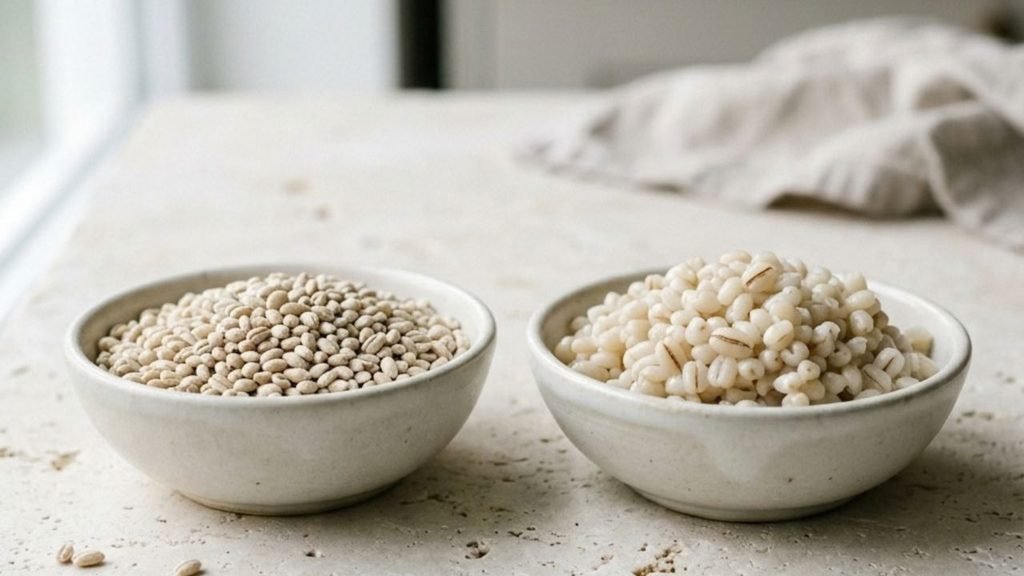
Barley is one of the oldest cultivated grains, long familiar in soups, stews, and everyday how to cook barley. What we now call pearled barley is the version most people know, while hulled barley keeps more of the grain intact. The difference may seem small, but it can change how the barley cooks and, more importantly, how it feels to eat.
The trouble with barley is rarely knowing what it is. It is knowing when it has gone from firm and pleasantly chewy to simply overcooked. The three steps below make that difference much easier to recognize.
Three Steps That Keep the Grain in Its Best Shape
1. Give the grains space to soften properly
Barley expands as it absorbs liquid, so it needs room.
A common mistake is using a small saucepan because the dry grains look insignificant at the beginning. By the time they have softened and expanded, the pot can feel surprisingly crowded.
A larger pot gives the grains enough liquid and space to cook evenly. It also makes it easier to manage the cooking liquid later.
For the most forgiving approach, barley can be cooked in a generous amount of water and drained once it reaches the desired texture. This removes one of the more frustrating variables: trying to predict exactly how much liquid the particular batch of barley will absorb.
The important point is not to force every grain to behave according to a fixed formula.
Barley is an agricultural product, not a perfectly manufactured object. Different varieties and levels of processing can produce slightly different results.
2. Keep the cooking gentle
A strong, rolling boil may look productive, but it is not necessary.
Barley benefits from a steady simmer that gives the grains time to soften gradually. The outside should become tender without the entire grain breaking down before the centre catches up.
This is particularly important if your goal is distinct, chewy grains.
Keep the heat moderate and watch the liquid level. If the water is disappearing quickly while the barley is still hard, the heat is probably too aggressive. Add more liquid rather than allowing the pot to run dry.
There is no prize for cooking barley as quickly as possible.
The better result is the one where the grain reaches the texture you intended without becoming swollen and soft.
3. Let your teeth make the final decision
This is the step that turns barley from a guessing game into a fairly simple piece of cooking.
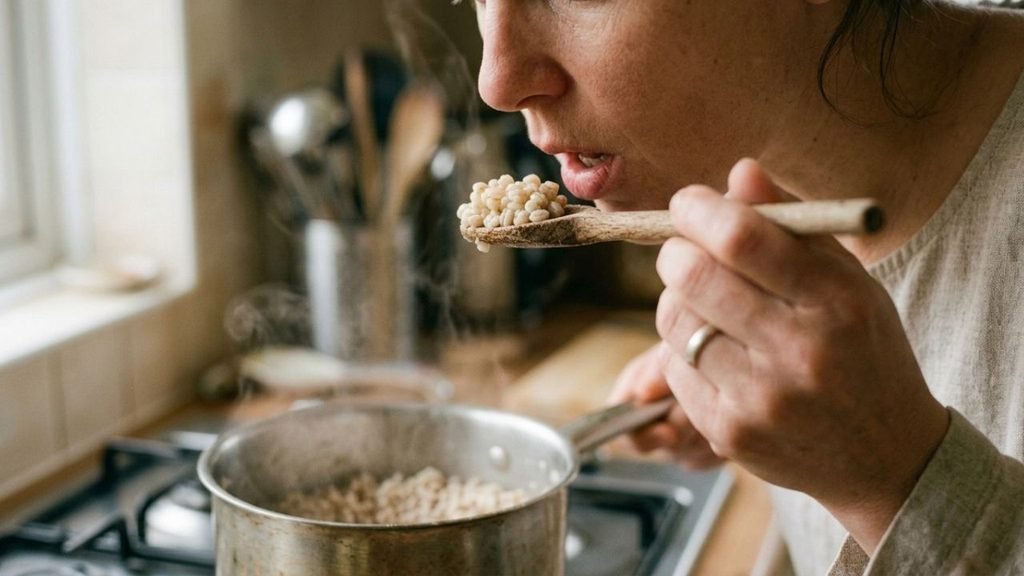
Take out two or three grains and taste them.
Don’t judge only by appearance. Barley can look plump and ready while the centre still needs time.
the grain has a hard centre, keep cooking.
If it is tender with a noticeable chew, it is ready for a firmer preparation.
If it collapses easily between your teeth and feels very soft, it has moved into the softer end of the spectrum.
That is not necessarily a mistake. It may be exactly right for a soup or stew.
The useful habit is tasting before you reach the point of no return.
The Most Common Barley Problems Have Simple Clues
Hard in the centre
The grain needs more cooking time. Keep the heat steady rather than turning it up dramatically.
Soft outside, firm inside
This usually means the grain has not had enough time to soften through completely. Continue cooking gently and test again after a short interval.
Completely soft and swollen
The barley has gone beyond the chewy texture many people prefer for salads and side dishes. It may still work well in soup, where a softer grain can blend naturally into the broth.
The water disappears too quickly
The pot may be too hot, too shallow or simply short on liquid. Add more water and continue cooking at a gentler temperature.
The grains stick together after draining
Barley carries surface starch and moisture when it comes out of the pot. Drain it thoroughly and give it a little time to cool before using it in a salad or other dish where separate grains matter.
The finished barley tastes flat
Barley itself has a fairly mild flavour. That is useful because it allows it to take on the character of whatever surrounds it, but it also means the grain will not necessarily provide a dramatic flavour on its own.
Small Adjustments for Different Dishes
The same cooked barley does not need to have the same texture every time.
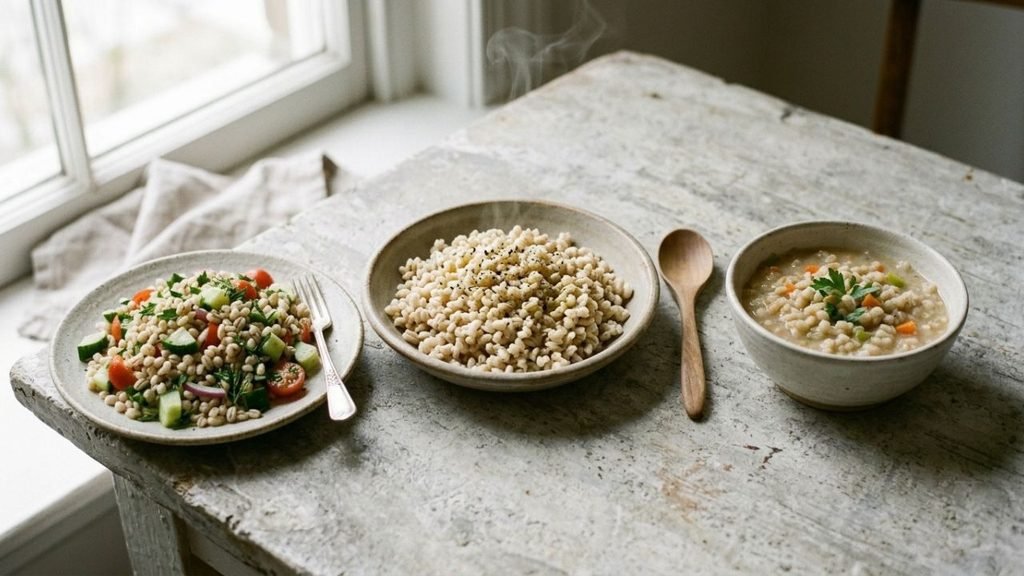
For soup, take the grains slightly further toward softness. They will continue sitting in hot liquid, so an extremely firm texture may not be what you want by the time the bowl reaches the table.
For grain salads, stop earlier. Distinct, chewy grains hold up better against dressing, vegetables and herbs.
For warm side dishes, aim somewhere in the middle. You want enough tenderness to make the barley comfortable to eat while keeping enough structure for the grain to remain noticeable.
For make-ahead barley, slightly firmer grains can be useful because they tend to retain more structure after cooling and reheating.
This is one of the reasons there is no single perfect barley texture. The dish changes the definition.
A Better Habit Than Memorising Cooking Times
Cooking time still has a place. It gives you a rough idea of when to start checking.
But memorising one number and applying it to every barley is less useful than learning what the grain looks and feels like when it is nearly ready.
Think of the timer as a reminder to check, not a command to stop.
That distinction is particularly valuable when switching between pearled and hulled barley. The grains may look similar in the packet, but processing changes how they behave in the pot. For a useful visual explanation of the differences between hulled, hulless, pearled and other forms of barley, see the Whole Grains Council’s guide to the different types of barley. Knowing which form you have makes cooking times much easier to interpret.
Once you start tasting instead of simply watching the clock, barley becomes much more predictable.
FAQ’s
1. Is pearled barley the same as hulled barley?
No. Pearled barley has been polished more heavily, while hulled barley retains more of its original outer layers.
2. Should barley always be chewy?
Not necessarily. Chewiness is desirable in many salads and side dishes, but softer barley can be preferable in soups and stews.
3. Why does barley take so long to cook?
The cooking time depends heavily on how the grain has been processed. Hulled barley generally takes longer to soften than pearled barley.
4. Can barley be overcooked?
Yes. Continued cooking eventually changes the grain from pleasantly chewy to very soft and swollen.
5. How do I know when barley is ready?
Taste it. The centre should no longer be hard, while the grain should still have the amount of resistance you want for the dish.
6. Why does my barley look different from another recipe?
It may be a different variety or level of processing. Check whether the recipe uses pearled, hulled or hulless barley before comparing cooking times.
The Point Is Not Perfect Barley. It Is the Right Texture.
Barley does not need complicated treatment. how to cook barley makes it easier to cook well is understanding that the grain itself gives you better information than a fixed number on a recipe card.
Know which barley you have, give it enough room and liquid, keep the heat controlled, and taste before deciding it is finished.
Once that becomes familiar, the grain stops being something you simply add to soup and becomes much more versatile. Its best quality is not that it how to cook barley quickly or looks impressive. It is that distinctive bite firm enough to notice, tender enough to enjoy, and adaptable enough to belong in a surprisingly wide range of dishes.