Challah French toast sits somewhere between breakfast and dessert. The bread itself, traditionally a braided Jewish bread made with eggs, has a soft, slightly sweet character, which is why it works so well for French toast. Its tender crumb gives each slice a fuller texture than ordinary bread. But that softness can also cause trouble when the center stays soggy.
The frustrating part is that the problem usually isn’t the challah at all. It is getting the bread, custard, thickness, and heat to agree with each other. This recipe keeps those variables simple so the center stays soft and rich without turning wet.
Prep and cook timing
| What you’re doing | Approx. time |
| Prep | 10 minutes |
| Soaking | 5–10 minutes |
| Cooking | 12–15 minutes |
| Total | About 30 minutes |
These are useful estimates rather than promises. Your slices may be thicker, your pan may heat differently, or you may simply prefer to take your time. The actual time you spend can vary depending on your kitchen, equipment, and pace.
What you’ll need
- 6 slices challah, about ¾-inch thick
- 3 large eggs
- ¾ cup whole milk
- 1 tablespoon granulated sugar
- 1 teaspoon vanilla extract
- ½ teaspoon ground cinnamon
- ¼ teaspoon salt
- 2 tablespoons butter, plus more if needed for the pan
- Maple syrup, for serving
- Powdered sugar, optional
- Fresh berries, optional
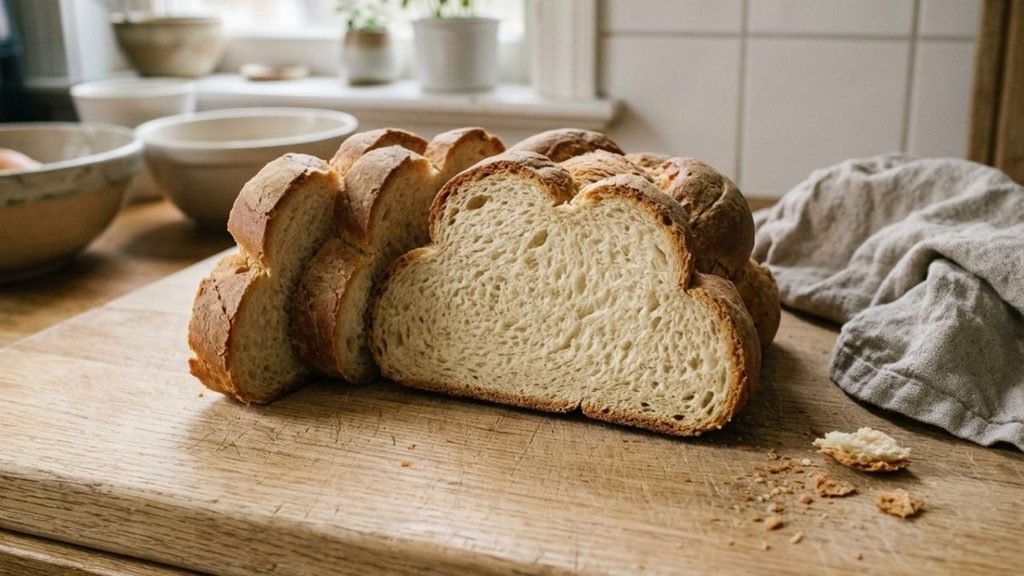
For the best texture, use challah that is a day old. If your challah is very fresh and soft, leave the sliced bread uncovered for a few hours before making the French toast. You want it slightly drier, not hard.
Simple swaps when the cupboard looks different
You don’t need to buy a special ingredient just to make this breakfast work. A few substitutions are easy, although they can change the final texture or flavor slightly.
| If you don’t have | You can use | What changes |
| Whole milk | Half-and-half | Richer, creamier center |
| Whole milk | 2% milk | Slightly lighter result |
| Vanilla extract | Vanilla paste | More noticeable vanilla flavor |
| Granulated sugar | Light brown sugar | Deeper, warmer sweetness |
| Cinnamon | Pumpkin pie spice | More aromatic and spiced |
| Butter | Neutral cooking oil | Less buttery flavor and a different crust |
| Fresh berries | Sliced banana | Softer, sweeter topping |
Directions
Start with the custard, not the pan
Whisk the eggs, milk, sugar, vanilla, cinnamon, and salt together in a shallow dish. Make sure the eggs are completely broken up so you don’t end up with streaks of cooked egg on the bread. Place the challah slices into the mixture one or two at a time. Let each side absorb some of the custard, but don’t leave the bread sitting there until it becomes difficult to lift.
For day-old challah, around 30–60 seconds per side is usually enough. Very fresh challah may need less time because its crumb is already soft and moist.
Give the pan a chance to settle
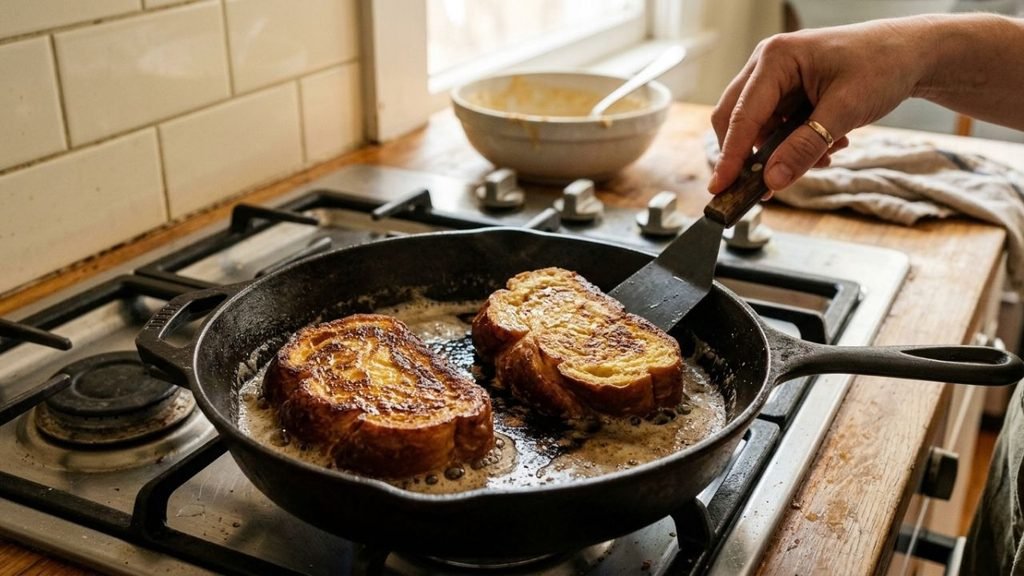
Place a large skillet over medium-low to medium heat and add the butter. Wait until the butter has melted and is gently foaming, rather than letting it become dark brown. Add the soaked challah in a single layer, leaving enough room to turn each piece comfortably.
The moderate heat is important here. You want the outside to develop color while the heat gradually reaches the center. If the pan is aggressively hot, the surface can brown long before the inside has had time to cook.
Cook until the color tells you something
Cook the first side for about 2–3 minutes. When it has developed a deep golden-brown surface, turn it carefully. Cook the second side for another 2–3 minutes. If the outside is becoming dark too quickly, reduce the heat rather than removing the toast immediately. Thick challah benefits from a little extra time over gentler heat.
If you’re cooking several batches, add a little more butter between batches whenever the pan becomes dry.
Give thicker slices extra patience
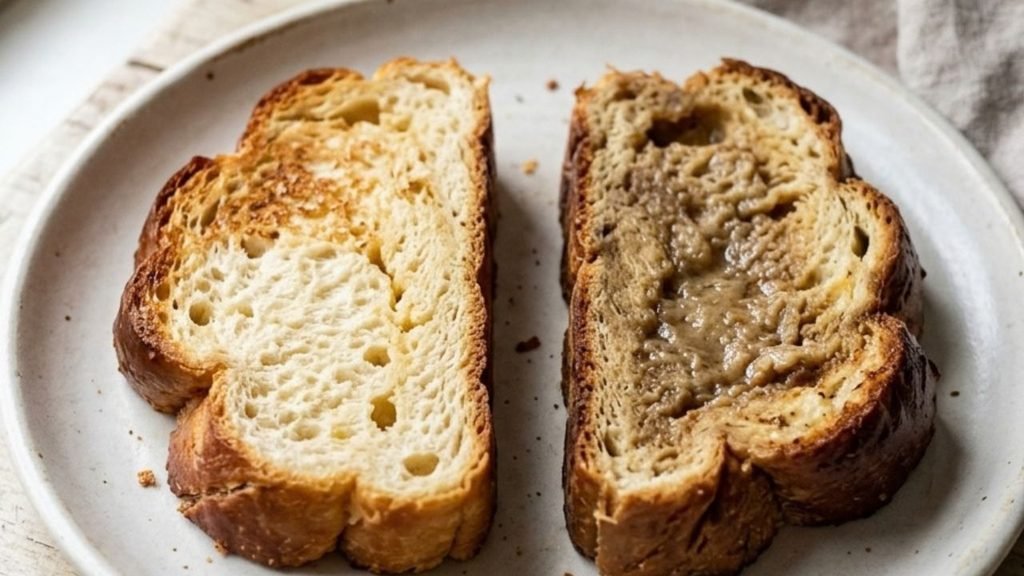
If your challah slices are closer to 1 inch thick, don’t rely entirely on the clock. After both sides have browned, lower the heat and let the slices continue cooking for another minute or two on each side. The center should feel soft when pressed, but it shouldn’t feel wet or collapse under very light pressure. The goal isn’t a dry center. Good challah French toast should remain tender inside.
The best part is the contrast
Serve the French toast while it is still warm, preferably with maple syrup added just before eating. A light dusting of powdered sugar works well if you want something less heavy, while berries add freshness against the buttery richness of the toast.
For a more substantial breakfast, serve it alongside fresh fruit or plain yogurt. If you’re making it for a slower weekend breakfast, you can also put the toppings on the table and let everyone finish their own slices.
One small detail makes a noticeable difference, don’t pour a large amount of syrup over the entire batch in advance. It softens the browned surface quickly. Let each person add as much as they want at the table.
Keeping leftovers worth eating
French toast is best straight from the pan, but leftovers can be kept if you happen to make more than you need. Let the cooked slices cool, then refrigerate them in a covered container. For the best quality, I’d aim to eat them within 2–3 days properly refrigerated leftovers can generally be kept for 3–4 days.
For reheating, a skillet or toaster oven is preferable to the microwave if you want to bring some of the surface texture back. The microwave warms the center quickly but tends to make the exterior soft.
If you are storing several slices, avoid piling them together while they are still warm. Let them cool first so trapped steam doesn’t make the browned surfaces damp.
Where French toast usually goes wrong
The bread was too fresh
Fresh challah already contains plenty of moisture. Once the custard goes in, the center can become saturated before the outside has had time to brown properly.
Day-old challah is easier to work with. If yours is fresh, simply give the slices some uncovered time before cooking.
The slices were soaked too long
More custard does not automatically mean better French toast.
The bread needs enough time to absorb the mixture, but once the center is saturated, additional soaking only makes the cooking problem harder.
The pan was too hot
This is probably the easiest mistake to spot.
If your French toast becomes dark brown while the middle is still wet, turn the heat down. The pan should be hot enough to brown the bread, but not so hot that the exterior races ahead of the center.
The slices were too thick
Thick challah can be excellent, but very thick slices require more patience. If you want a quicker breakfast, stay closer to ¾ inch.
You crowded the skillet
Too many slices at once makes turning awkward and can lower the pan temperature. Cook in batches if necessary. A little extra time is better than trying to squeeze everything into one skillet.
You kept flipping the toast
French toast doesn’t need constant attention. Give the first side time to develop a crust before turning it. Repeated flipping can make it harder to judge how quickly the bread is actually cooking.
FAQ’s
1. Can I use fresh challah?
Yes. It just needs a little more attention. Fresh challah is softer and wetter, so shorten the soaking time or let the sliced bread sit uncovered beforehand.
2. Can I make this without cinnamon?
Absolutely. Cinnamon adds warmth, but it isn’t essential to the structure of the recipe. Vanilla and a little sugar are enough for a simple version.
3. Why is my French toast soggy in the middle?
Usually because the bread absorbed too much custard, the slices were very thick, or the pan was too hot. Any one of those can leave the exterior cooked before the center catches up.
4. Can I make thicker slices?
Yes, but expect them to take longer. Lower the heat once the surface has browned and give the center time to finish cooking.
5. Is challah better than regular bread for French toast?
It depends on what you want. Challah has an enriched, tender crumb and mild sweetness, so it produces a particularly rich French toast. Regular bread can be lighter and less delicate.
The small adjustment that changes the whole plate
Good challah French toast doesn’t require complicated ingredients or a complicated technique. What matters is starting with bread that can actually handle the custard, keeping the slices reasonably thick, and giving the pan enough time to brown the outside without rushing the middle.
Once those pieces line up, the result is exactly what challah is good at. a crisp, buttery surface giving way to a soft center that feels rich rather than wet. The difference is small, but when you cut into the first slice, you can see it immediately.