beet root juice has become two things at once. It is the familiar red root vegetable eaten for generations, but it is also the intensely coloured juice now linked with exercise and wellness. Known as beet in American English and beetroot in Britain, it is also called Beta vulgaris. Its earthy taste and vivid colour are familiar, while its natural nitrates have given it a newer reputation among fitness enthusiasts.
The real problem is knowing when beetroot juice is worth choosing over whole beets, especially when both seem to offer the same benefits. This article breaks down the difference.
The difference begins before you take the first sip
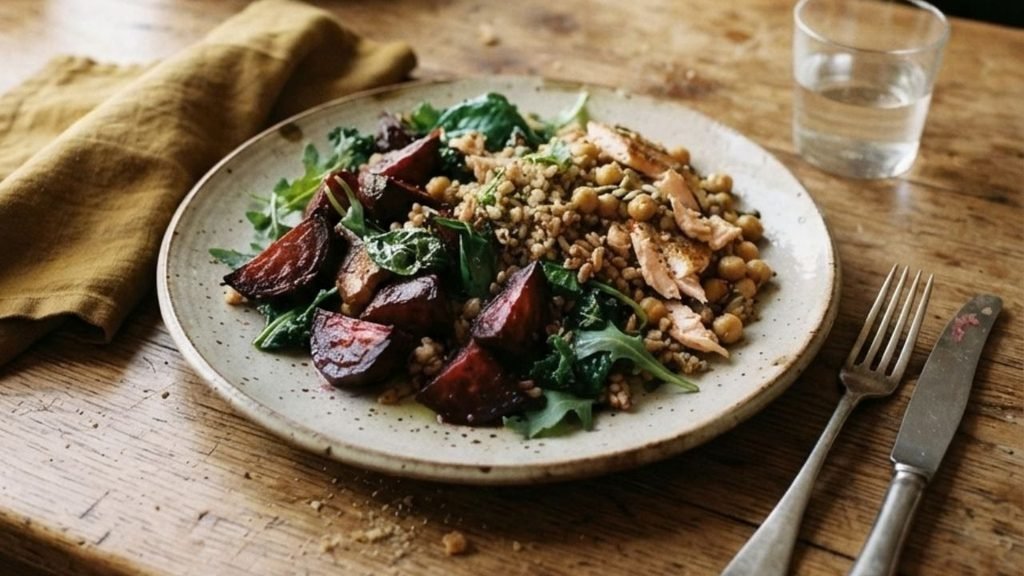
The whole beetroot arrives with its natural structure intact. Juice changes that structure, making the vegetable easier to consume in a concentrated form and removing much of the fibre that would otherwise remain in the food. That sounds like a small distinction, but it changes the reason you might choose one over the other.
Whole beet root juice makes sense as part of an ordinary diet. It brings fibre and volume along with its naturally occurring nutrients and plant compounds. Juice is more useful when the concentration itself matters, particularly for people who are interested in beetroot’s nitrate content.
Neither form needs to be treated as the “correct” one.
The better choice depends on what you actually want from it.
Why beetroot juice became associated with performance
beet root juice modern reputation is closely connected to nitrate. Nitrate occurs naturally in several vegetables, including beetroot. In the body, dietary nitrate can enter a pathway involving nitrite and nitric oxide. Nitric oxide has several roles in normal physiology, including its relationship with blood-vessel function.
This is part of the reason beetroot juice has attracted attention in sports nutrition.
The point is not that drinking beetroot juice suddenly makes someone fitter. The interest is more specific: concentrated beetroot products have been studied in relation to exercise performance, particularly endurance and high-intensity activity.
That gives the juice a particular role that the whole beetroot does not necessarily need to have.
If someone is simply trying to eat more vegetables, there is no obvious reason to turn beetroot into a performance drink. If someone is deliberately interested in dietary nitrate around exercise, a concentrated juice can be a more convenient format.
Whole beetroot has an advantage that a bottle cannot replace
There is a tendency to assume that concentration means improvement. It doesn’t always. Whole beet root retains its fibre, while juice generally contains much less. That changes how the food fits into a meal and how much of it can be consumed without much effort. For broader context on why fibre from whole plant foods matters within the diet, see the Harvard T.H. Chan School of Public Health’s guide to dietary fibre. This is one of the quieter advantages of eating the vegetable itself.
A glass can disappear quickly. Eating a substantial portion of a whole vegetable is a different experience. The food has more physical presence, takes longer to consume and contributes to the overall structure of a meal.
For everyday eating, those things matter.
The fact that juice is easier to consume is useful when concentration is the goal. It is not necessarily an advantage when the goal is simply building a varied diet.
The label can tell you more than the colour
Beet root juice has an unmistakable appearance. That deep red colour makes it feel concentrated before you even know what is inside the bottle. But colour is not a reliable way to judge nitrate content. Different beetroot products can contain different amounts of nitrate, and a strongly coloured drink does not automatically mean that it contains a particular amount. Someone choosing juice specifically because of its nitrate content therefore has a more useful question to ask than “Does this look like beetroot?”
Look at what the product actually tells you.
This is particularly relevant with products marketed toward exercise. Packaging can suggest energy, strength or performance without explaining exactly what makes one product different from another.
The useful distinction is between beetroot-flavoured convenience and a product that clearly identifies what it contains.
Exercise is where the decision becomes more specific
For an ordinary lunch or dinner, there is little reason to make beetroot complicated. The calculation changes when beetroot is being used deliberately around exercise. Research into beetroot juice has often focused on consuming it before physical activity, because nitrate is the component researchers are particularly interested in. That makes juice convenient: a relatively small amount of liquid can provide a concentrated source without requiring someone to eat a large serving of vegetables immediately before training.
This does not mean every person exercising needs beetroot juice. The potential usefulness is more relevant to someone who already has a structured training routine and wants to experiment with a food-based source of nitrate. For casual exercise, the difference is unlikely to be the first thing worth worrying about.
Sleep, training consistency, adequate food and recovery are not replaced by a bottle of red juice.
A small detail about beetroot is easy to overlook
Beetroot’s nitrate story is not entirely about what happens after you swallow it. Bacteria in the mouth are involved in the conversion of nitrate into nitrite, which is part of the pathway connected with nitric oxide. In other words, the relationship between beetroot and the body begins before the nutrients have travelled very far through the digestive system.
It is an unusual detail because it turns a simple food into a small biological chain involving the vegetable, the mouth and normal body processes.
It also explains why beetroot’s effects cannot be reduced to the simplistic idea that one ingredient goes in and one benefit automatically comes out. Food rarely works that neatly.
A better way to decide between the two
The easiest approach is to start with the purpose rather than the product. For everyday nutrition, choose whole beetroot. It remains a vegetable, provides fibre and fits naturally into a varied diet. For a concentrated nitrate source around exercise, juice may be more practical. It is easier to consume a consistent quantity than it is to estimate the nitrate content of an ordinary serving of whole beetroot.
For convenience, juice has the obvious advantage. There are situations where drinking something is simply easier than eating it.
For building better meals, whole beetroot has the stronger role. It contributes to the meal instead of becoming a separate nutritional product.
For someone already eating a varied diet, neither needs to become a daily obsession. Beetroot can be useful without becoming a test of how much beetroot you can consume.

A few practical details worth knowing
- Do not judge a beetroot product by colour alone. The red pigment tells you very little about the amount of nitrate present.
- Check the purpose before buying the product. A juice intended simply as a drink is not necessarily the same thing as a product chosen specifically for nitrate.
- Remember the fibre difference. Juice and whole beetroot should not be treated as nutritionally identical.
- Keep exercise claims in proportion. Beetroot may have a role in performance nutrition, but it is not a substitute for training, food, sleep or recovery.
- Do not assume more is better. Increasing the amount does not automatically mean increasing the usefulness.
- Expect the colour to linger. Beetroot’s natural pigments can temporarily make urine or stools appear reddish or pink, which can be surprising if you are not expecting it.
- Consider your own circumstances. People managing kidney stones, blood pressure or particular dietary restrictions should not assume that a concentrated food product is suitable simply because it is natural.
FAQ’s
1. Juice and whole beetroot are not interchangeable?
They come from the same vegetable, but juicing changes the amount of fibre, the concentration and the way the food is consumed.
2. Whole beetroot still has a place in performance nutrition?
The nitrate is not exclusive to juice. Whole beetroot also naturally contains nitrate, although the amount can vary.
3. Juice is mainly interesting for concentration?
Its strongest practical advantage is that it can deliver beetroot in a concentrated, convenient form, which is particularly relevant to people interested in exercise.
4. Beetroot is not an instant energy drink?
Its reputation around exercise comes from its nitrate content and related physiological pathways, not from the kind of stimulant effect associated with caffeine or conventional energy drinks.
5. Red urine after beetroot happens?
The vegetable’s pigments can pass through the body and temporarily change the colour of urine or stools.
The useful choice is rarely the most concentrated one
Beetroot juice has a legitimate reason for existing beyond wellness packaging. It offers a convenient, concentrated way to consume compounds that have attracted interest in exercise and nutrition. But that does not make it a better replacement for the vegetable itself.
For most everyday eating, whole beetroot remains the simpler choice. Juice becomes more interesting when there is a specific reason for wanting concentration and convenience. Once that distinction is understood, the decision becomes much less about which one is “healthier” and more about choosing the form that actually fits the purpose.