Colby Jack is one of those cheeses people recognize without always knowing what they are looking at. Its orange-and-white marbling makes it easy to spot, while the name reveals its roots. It combines Colby and Monterey Jack, two American cheeses with different characters. The result is a mild, familiar cheese that is easy to recognize and choose.
Choosing Colby Jack can be confusing when every block looks similar. How do you know which one is fresh, flavorful, and worth buying? This guide explains what to look for.
1. The Marbling Has a Story Behind It
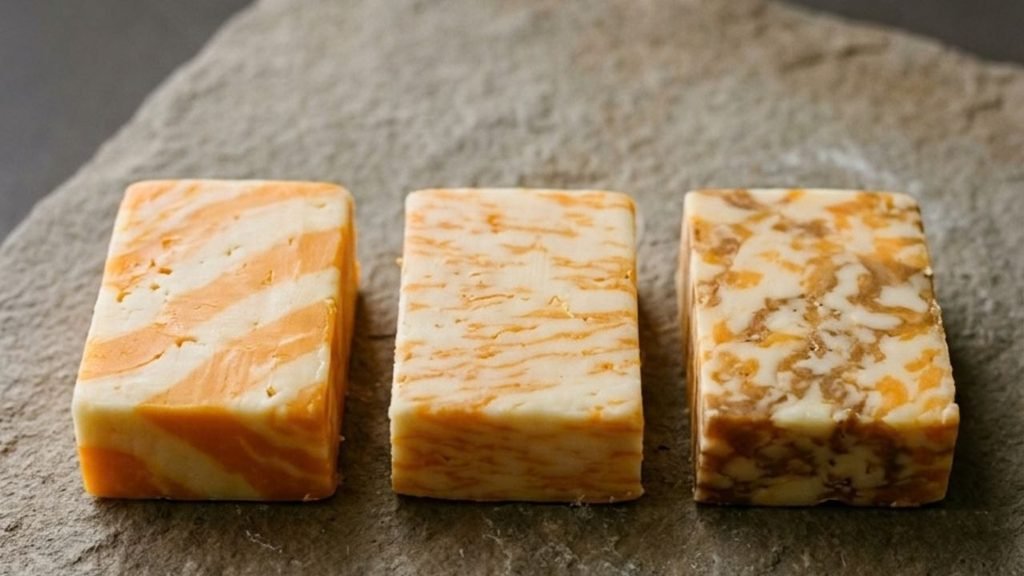
The orange-and-white pattern is the first thing most people notice, but it is more than a visual trick. Colby Jack is made by bringing Colby and Monterey Jack together, which leaves their contrasting colors visible through the finished cheese. Instead of producing one uniform block, the combination creates the familiar streaked appearance that has become almost inseparable from the name.
Colby itself has a long connection to Wisconsin, while Monterey Jack developed its own identity as an American cheese with a softer and creamier character. Their combination gives Colby Jack a visual identity that is immediately recognizable.
Look closely at different pieces and you will rarely find exactly the same pattern. Some have broad orange sections, others are more finely marbled. That variation is part of the appeal.
The cheese looks composed, but never completely uniform.
2. Two Cheeses Give It Its Middle-Ground Character
Understanding Colby Jack becomes easier when you stop treating it as one flavor. Colby tends to have a little more tang and a somewhat more open texture. Monterey Jack is usually softer, creamier and more restrained. Neither side completely dominates the finished cheese.
That balance explains much of its popularity.
Colby Jack generally does not have the sharpness associated with strongly aged cheeses, but it also does not disappear completely. There is enough flavor to make it recognizable without demanding all of your attention.
This middle-ground quality is easy to underestimate.
A cheese does not have to be powerful to have character. Colby Jack’s character comes from the relationship between its two sides, rather than from intensity.
3. Mild Does Not Mean Empty
The word “mild” can make a cheese sound almost anonymous. With Colby Jack, that is misleading. Its flavor tends to sit around gentle dairy richness, soft tang and a relatively clean finish. There is no need for a dramatic aftertaste because its appeal comes from balance.
This also means freshness matters more than many people realize.
A strongly flavored aged cheese can sometimes hide small changes in texture or freshness behind its intensity. Colby Jack has less cover. When it is fresh, its softness and mild flavor feel deliberate. When it has dried out, the difference is immediately noticeable.
That makes Colby Jack an interesting example of how subtle food can still have a very specific personality.
It does not need to shout.
4. Texture May Tell You More Than Flavor
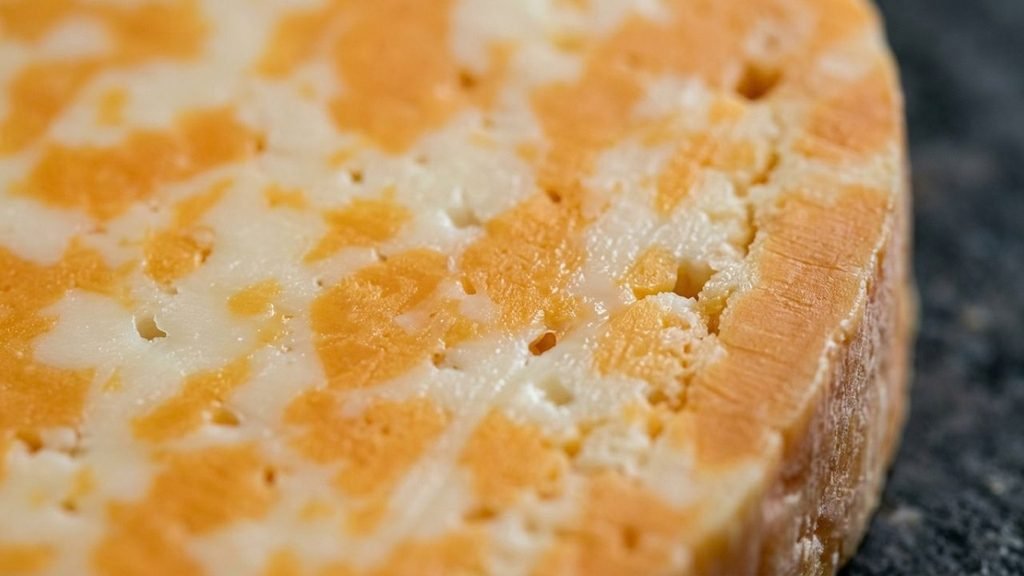
When people describe cheese, they usually start with taste. With Colby Jack, texture deserves equal attention. A good piece should feel moist and supple rather than brittle. It should have enough structure to hold together, but it should not feel hard or dry. The surface should look reasonably smooth, without excessive cracking or leathery edges.
That combination of softness and structure is one of the cheese’s defining qualities.
It also explains why Colby Jack feels so different from harder, more mature cheeses. There is less resistance when you bite into it, and the texture contributes much of the sense of richness.
If you are comparing two packages, therefore, don’t focus entirely on the color pattern. Look at the physical condition of the cheese.
A beautiful marbled block that has begun to dry around the edges is not necessarily a better choice than a less dramatic-looking piece that remains fresh and supple.
5. The Orange Color Can Fool Your Eye
Orange cheese often creates an expectation of stronger flavor. Colby Jack is a useful reminder that color and intensity are not the same thing. The orange portion associated with Colby traditionally comes from annatto coloring, an example of a food color additive recognized by the U.S. Food and Drug Administration’s guidance on color additives in foods. The coloring gives the cheese its familiar appearance, but it does not automatically mean that the orange sections are sharper, older or more intensely flavored.
That distinction is easy to miss because appearance influences how we expect food to taste.
The strong visual contrast of Colby Jack makes it look more assertive than its flavor usually is. The orange suggests something bold, but the actual experience is generally much quieter.
That contrast is part of what makes the cheese interesting.
It has a visual confidence that its flavor does not necessarily share.
6. Choosing a Good Piece Is Mostly About Freshness
There is no complicated system required for choosing Colby Jack. Start by looking at the surface. Avoid pieces that appear excessively dry, cracked or leathery, particularly around the edges. A fresh piece should look cohesive and retain some visible moisture without appearing wet.
Then consider the texture if you can assess it through the packaging. You want something that appears firm enough to hold its shape but still supple.
The marbling itself is less important than many people assume.
A dramatic orange-and-white pattern can make a package more attractive, but it does not automatically tell you anything about quality. Natural variation in the pattern is perfectly normal.
Packaging also matters because exposure to air gradually changes the cheese. Colby Jack is at its best when its moisture and softness are preserved.
For occasional use, buying a smaller piece can sometimes make more sense than keeping a large block for too long.
The simplest rule is to choose freshness and texture before visual drama.
7. Its Real Strength Is Being Easy to Live With
Colby Jack is not usually chosen because someone wants the most intense cheese in the room. Its appeal is more practical than that. It is familiar without being completely bland, flavorful without being aggressive, and soft without feeling fragile. Those qualities make it comfortable in everyday life.
It also explains why it appeals to different preferences at once someone who prefers mild cheeses can enjoy it. Someone who likes a little tang can find enough character in it. Someone who simply likes the marbled appearance gets something visually distinctive.
Few cheeses need to satisfy all of those expectations.
Colby Jack manages it largely because it does not push too hard in any one direction.
That may be its most overlooked quality. Its versatility is what gives Colby Jack its personality.
A Few Useful Things to Notice
If you want to understand Colby Jack better, pay attention to a few details the next time you have a piece in front of you.
- Look at the marbling: Notice whether the orange and white sections are broad, fine, irregular or tightly blended.
- Check the edges: Excessive dryness is usually more revealing than an imperfect color pattern.
- Notice the texture: Fresh Colby Jack should feel supple rather than brittle.
- Pay attention to the finish: Its mild tang often becomes more noticeable after the initial creamy impression.
- Compare freshness: A freshly opened piece can feel noticeably different from one that has spent several days exposed to air.
These small observations turn an ordinary supermarket cheese into something easier to understand.
FAQ’s
1. Is Colby Jack actually two cheeses?
Yes. Its name comes from the combination of Colby and Monterey Jack, which gives the finished cheese its distinctive marbled appearance and balanced character.
2. Why is Colby Jack orange and white?
The orange coloring is traditionally associated with the Colby portion, while Monterey Jack provides the lighter color. The contrast remains visible when the two are combined.
3. Is Colby Jack a strong cheese?
Generally, no. It is known for a mild, approachable flavor with gentle tang rather than the sharpness found in many aged cheeses.
4. Does Colby Jack taste like Colby?
It has some of Colby’s character, but the Monterey Jack component softens and rounds the overall profile. The finished cheese should not be thought of as plain Colby.
5. What should fresh Colby Jack feel like?
It should be moist, supple and cohesive, with enough structure to hold its shape. Excessive dryness or brittleness can indicate that the cheese has lost some of its freshness.
The Appeal Is in the Balance
Colby Jack is easy to overlook because it is so familiar. Its orange-and-white pattern has become ordinary, its flavor is deliberately restrained, and it rarely demands the attention given to stronger or more unusual cheeses. But that quietness is precisely what makes it worth understanding. The cheese works because Colby brings tang, while Monterey Jack adds softness and creaminess.
Once you know what to look for, Colby Jack stops being simply the orange-and-white cheese on the shelf. It becomes a small example of how two different identities can create something more useful, familiar and lasting when they are brought together.