New Orleans bbq shrimp recipe is known for its rich, buttery sauce, bold black pepper, garlic, and tender shrimp. Despite its name, this Southern favorite is not usually grilled or coated in traditional barbecue sauce. It is a skillet-cooked dish with roots in New Orleans restaurant culture, often served with crusty bread to soak up the savory sauce. The combination of butter, Worcestershire sauce, and spices gives it a distinctive flavor that is both rich and slightly sharp.
The tricky part is getting that deep flavor without ending up with rubbery shrimp or a greasy sauce. A few small adjustments to the cooking time and the way the butter is handled can make a noticeable difference.
BBQ Shrimp Recipe at a Glance
| Preparation detail | Estimated time |
| Prep time | 10 minutes |
| Cook time | 10–12 minutes |
| Total time | About 20–25 minutes |
| Servings | 4 people |
| Cooking method | Stovetop |
| Difficulty | Easy |
These times are estimates for planning purposes. Your actual preparation and cooking time may vary depending on how quickly you work, the size of your shrimp, your stove, and whether your ingredients are ready to use.
Ingredients for a Rich, Peppery Sauce
- 1½ pounds (680 g) large raw shrimp, peeled and deveined
- 8 tablespoons (113 g) unsalted butter, divided
- 1 tablespoon olive oil
- 5–6 garlic cloves, finely minced
- 2 tablespoons Worcestershire sauce
- ¼ cup (60 ml) seafood stock, chicken stock, or water
- 1 tablespoon fresh lemon juice
- 1 teaspoon smoked paprika
- 1 teaspoon freshly ground black pepper
- ½ teaspoon cayenne pepper
- ½ teaspoon dried thyme
- ½ teaspoon dried oregano
- ¼ teaspoon salt, or to taste
- 2 tablespoons chopped fresh parsley
- Lemon wedges, for serving
- Crusty bread, for serving
Ingredient swaps that still work
Some ingredients in bbq shrimp recipe may not be available in every kitchen. These substitutions can help you keep the flavor balanced without making a special shopping trip.
| Original ingredient | Possible replacement | What changes |
| Seafood stock | Chicken stock or water | Chicken stock adds savory depth; water keeps the sauce lighter. |
| Smoked paprika | Sweet paprika | You lose some smokiness, but the color and mild pepper flavor remain. |
| Fresh lemon juice | Fresh lime juice | Lime gives the sauce a slightly sharper citrus note. |
| Fresh parsley | Fresh chives | Chives provide a mild onion flavor and a fresh finish. |
| Unsalted butter | Salted butter | Reduce or omit the added salt until you taste the finished sauce. |
| Cayenne pepper | Red pepper flakes | The heat may be less evenly distributed, so add a small amount first. |
Worcestershire sauce is worth keeping if possible. Its tangy, savory character helps give the sauce more depth than butter and garlic alone.
Directions
The key is to build the flavor base first, cook the shrimp briefly, and finish the sauce gently. Have your serving bread and sides ready before you begin, because shrimp are best served soon after cooking.
1. Prepare the shrimp
Pat the shrimp dry with paper towels. If using frozen shrimp, thaw them completely and drain away excess water. Keep them refrigerated until you are ready to cook. For additional guidance on thawing seafood and preventing cross-contamination, consult the FDA’s Selecting and Serving Fresh and Frozen Seafood Safely guide.
Dry shrimp help prevent unnecessary liquid from diluting the sauce. Large shrimp are a good choice because they are generally easier to monitor than smaller ones.
2. Start with garlic and spices
Heat a large skillet over medium heat. Add the olive oil and 2 tablespoons of butter.
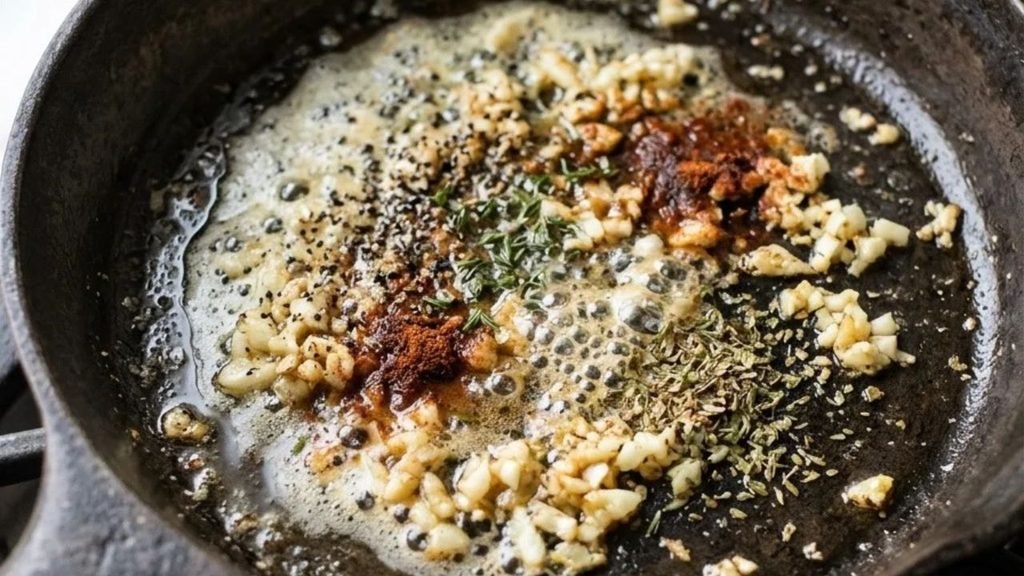
Once the butter melts, stir in the minced garlic, black pepper, smoked paprika, cayenne, thyme, and oregano. Cook for about 30–45 seconds, just until fragrant. Avoid browning the garlic too much, as it can turn bitter.
Pour in the Worcestershire sauce and stock. Stir well, scraping up any flavorful bits from the bottom of the pan, and let the mixture simmer gently for about a minute.
3. Cook the shrimp briefly
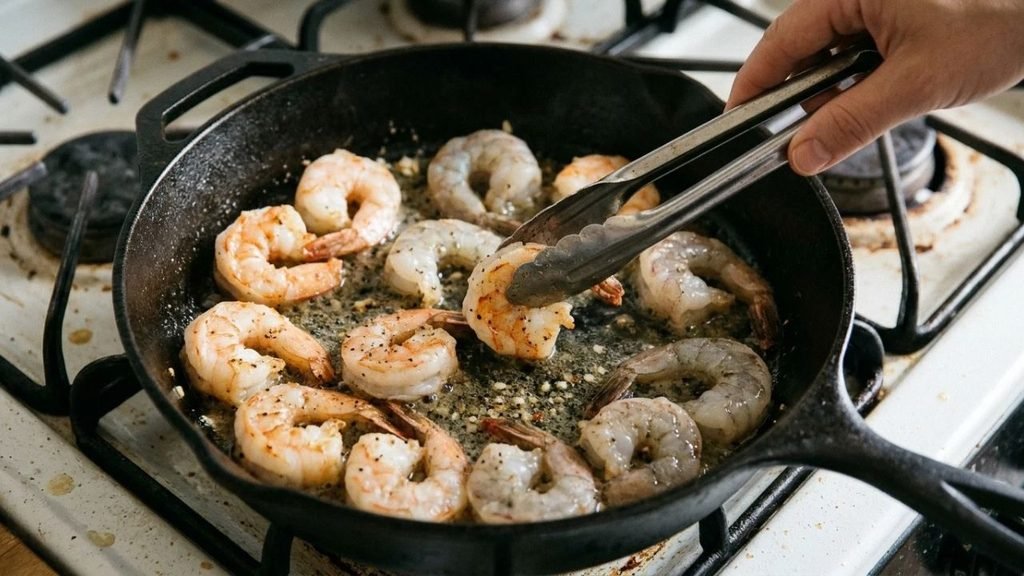
Arrange the shrimp in a single layer in the skillet. If your pan is too small, cook them in batches rather than crowding them.
Cook for approximately 1–2 minutes on the first side, then turn and cook for another 1–2 minutes, adjusting for their size. They should turn opaque and pink, with a loose curl.
For food safety, shrimp should reach an internal temperature of 145°F (63°C). Avoid leaving them simmering in the pan after they are cooked, since the residual heat can make them tough.
4. Finish with butter and lemon
Lower the heat and add the remaining 6 tablespoons of butter in small pieces, stirring gently until the sauce looks glossy. Keep the heat low rather than allowing the sauce to boil vigorously.
Stir in the lemon juice and chopped parsley. Taste before adding salt because the Worcestershire sauce and stock may already provide enough seasoning.
If the sauce feels too rich, add a little more lemon juice. If it is too thick, loosen it with a tablespoon of warm stock or water. Serve immediately while the shrimp are tender and the sauce is smooth.
Serving Ideas That Complement the Sauce
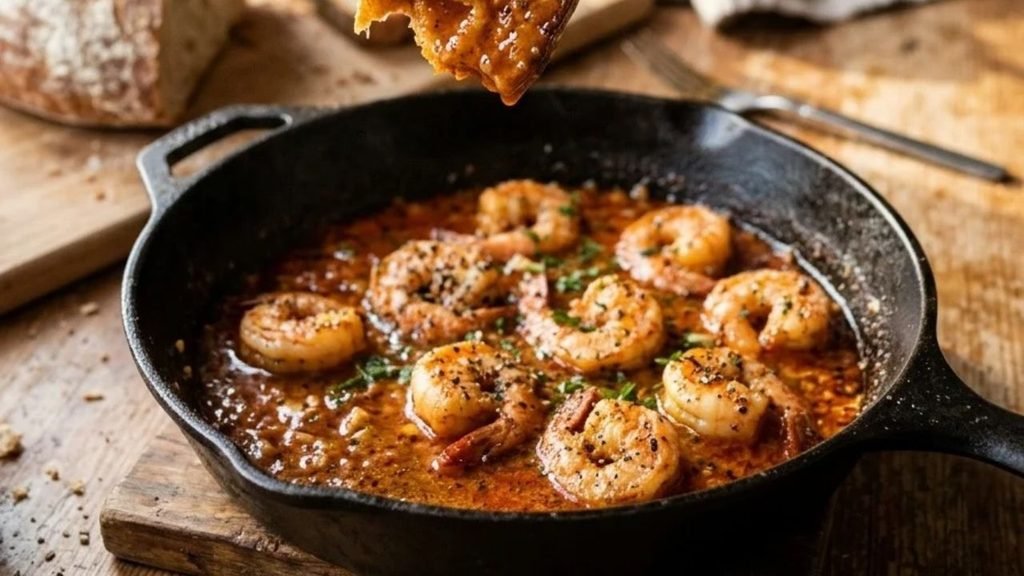
Crusty bread is a natural companion to BBQ shrimp. A baguette, sourdough, or rustic loaf gives you a crisp exterior and a soft interior that can absorb the buttery sauce without falling apart too quickly.
For a more substantial meal, serve the shrimp over plain rice. The mild flavor of rice balances the peppery sauce without competing with it. Steamed green beans, roasted asparagus, or a simple green salad with a tangy dressing can add freshness to the plate.
Keep the sides relatively simple. The shrimp already bring plenty of richness and seasoning, so another heavy, creamy dish may make the meal feel too filling.
Keeping Leftovers Without Losing Too Much Texture
bbq shrimp recipe tastes best freshly cooked, but leftovers can still be useful for another meal. Transfer them to a covered container and refrigerate within two hours of cooking.
As a general food-safety guideline, cooked shrimp can usually be refrigerated for three to four days when stored properly at 40°F (4°C) or below. The actual quality you experience will depend on how quickly the shrimp were cooled, how consistently they were refrigerated, and how fresh they were before cooking. Use your judgment, and discard them if there are signs of spoilage.
To reheat, place the shrimp and sauce in a skillet over low heat. Stir gently until heated through, adding a small splash of water or stock if the butter has separated or the sauce has thickened. Avoid prolonged simmering, which can make the shrimp firm and dry. For the best texture, reheat only the amount you intend to eat.
Common Mistakes That Can Ruin BBQ Shrimp
Overcooking the shrimp. Shrimp need only a short time in the skillet. Watch for opaque flesh and a loose curl, and avoid leaving them in the hot sauce once they are done.
Burning the garlic. Garlic can become bitter quickly over excessive heat. Keep it moving in the butter and add the liquid before it browns deeply.
Adding too much salt too early. Worcestershire sauce and stock can both contain salt. Taste the sauce near the end and adjust only if necessary.
Using too much liquid. Excess stock can leave the sauce thin and dilute its flavor. Start with the measured amount and add more only if needed.
Letting the butter boil aggressively. High heat can cause the sauce to separate into a layer of fat and watery liquid. Lower the heat before adding the finishing butter and stir gently.
Skipping the lemon. Without some acidity, the butter can dominate the dish. Start with the measured lemon juice, taste, and adjust gradually.
Frequently Asked Questions
1. Is New Orleans BBQ shrimp actually grilled?
Usually, no. The well-known New Orleans version is commonly prepared in a skillet with butter, Worcestershire sauce, garlic, and seasonings. The name refers to a regional dish rather than conventional grilled shrimp with barbecue sauce.
2. Can I use frozen shrimp?
Yes. Thaw them completely, drain them well, and pat them dry before cooking. Excess water can dilute the sauce and make it harder to control the final consistency.
3. Should I leave the shells on?
You can. Shell-on shrimp may add flavor to the sauce, but they are messier to eat and require more attention when cooking. Peeled and deveined shrimp are more convenient for an everyday meal.
4. How do I make the sauce less spicy?
Reduce the cayenne pepper first. You can keep the black pepper for its characteristic bite while making the overall heat milder. Taste before adding any extra spices.
5. Why does my butter sauce look oily?
The heat may be too high, or the sauce may need a little additional liquid. Remove the skillet from the heat, add a small splash of warm stock or water, and swirl gently to help bring the sauce together.
A Better BBQ Shrimp Dish Starts With Knowing When to Stop
Good bbq shrimp recipe does not require complicated techniques or an unusually long ingredient list. Its success depends on giving the garlic and spices enough time to release their flavor, keeping the butter sauce under control, and taking the shrimp off the heat before they become tough.
Serve the dish while it is hot, keep the bread close, and let the peppery sauce do its work. With a little attention to heat and seasoning, this New Orleans favorite can become a reliable meal for a relaxed dinner or a table full of guests.