rump roast recipe is a classic cut that has long found its place at the family dinner table. Taken from the hindquarters of the cow, it is also sold as bottom round rump roast. Leaner than richly marbled roasts, it offers a firm texture and deep beef flavor, but it can turn dry or chewy without careful cooking.
The real frustration with rump roast is simple. How do you get that substantial piece of beef tender without cooking the life out of it? The answer comes down to a few easy-to-miss details that can make a noticeable difference.
Five Details That Keep the Beef From Turning Tough
1. Let Salt Do More Than Sit on the Surface
Salt is easy to underestimate with a large roast.
A quick sprinkle immediately before cooking will season the exterior, but giving the seasoning more time allows it to distribute more evenly through the outer portion of the meat. If you can season several hours ahead, even better.
You do not need a complicated marinade or a cupboard full of spices. Rump roast already has a pronounced beef flavor. The more useful goal is even seasoning that supports the meat instead of covering it.
A good rule is to season deliberately rather than treating salt as something added at the very end.
2. Give the Outside Some Serious Color
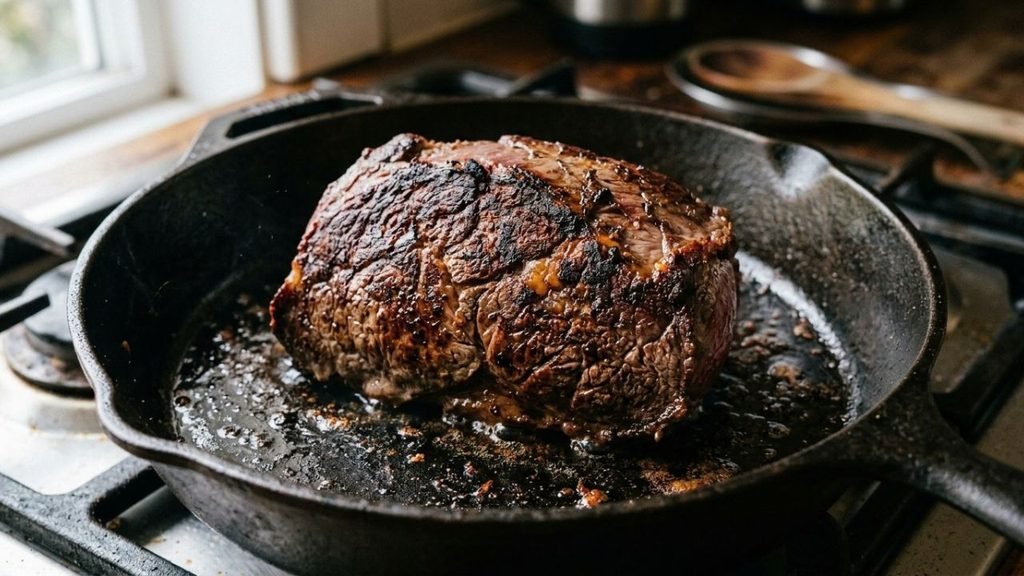
The browned surface is not merely there to make the roast look finished.
rump roast recipe is relatively lean, so building a deeply browned exterior gives the meat a richer contrast against its firm interior. Dry the surface before browning and make sure the pan is properly heated so the beef actually develops color rather than simply steaming against a wet surface.
There is an important distinction here: browning improves flavor, not tenderness.
That distinction matters because a roast can have an excellent crust and still be overcooked inside. Treat the browned exterior as one part of the finished roast, not proof that the center is ready.
3. Stop Letting the Clock Make the Decision
Cooking times are useful for estimating when dinner might be ready. They are not a reliable way to judge the exact moment a particular rump roast has reached the texture you want.
The roast’s thickness, shape, starting temperature, and your oven all affect how quickly it cooks.
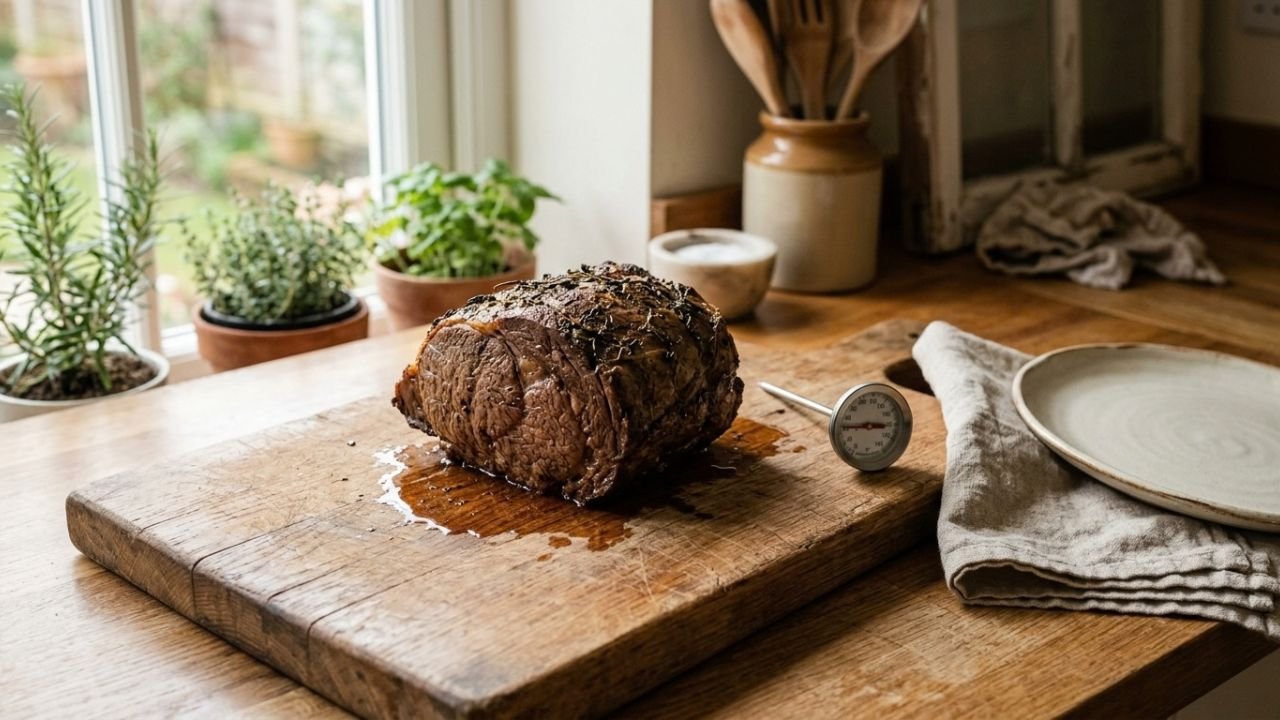
A meat thermometer removes much of that guesswork. Check the thickest part of the roast rather than judging by the outside. For a useful reference on safe internal temperatures for beef roasts, the USDA’s guidance explains both the minimum temperature and the recommended resting period.
This becomes particularly important with rump roast because lean beef gives you less room for error. A few extra degrees can make a noticeable difference in the final texture.
4. Resting Is Part of the Roast
The moment the beef leaves the oven is not the moment it should be attacked with a carving knife.
Give it time to rest before slicing. This short pause allows the roast to settle and gives you time to finish the rest of the meal.
It is also practical. While the meat rests, you can deal with the pan juices, prepare the serving platter, or finish the vegetables without rushing the carving.
Do not cut the resting time down simply because everyone is hungry. A roast is a large piece of meat, and patience at this stage costs very little.
5. The Direction of Your Knife Matters
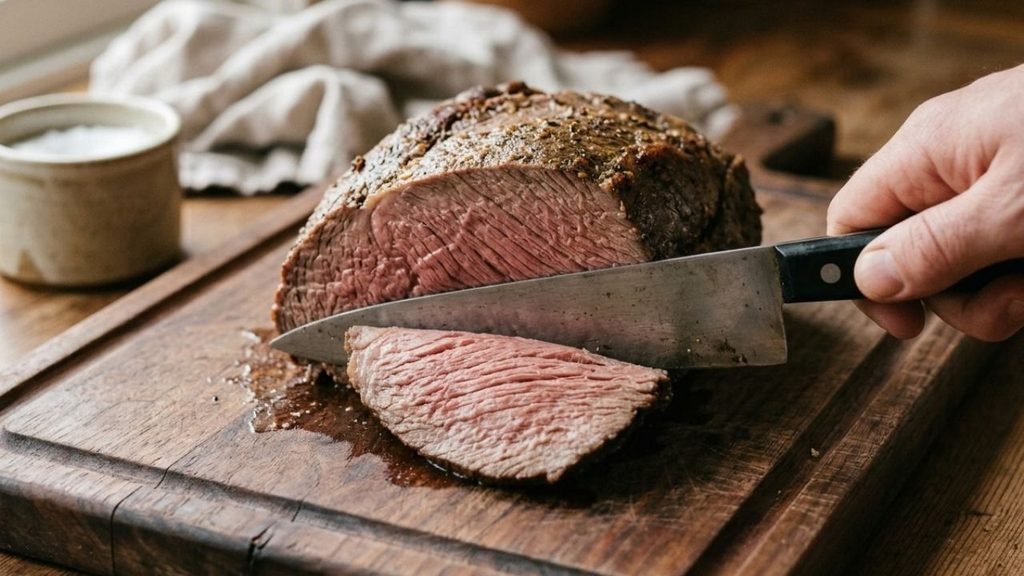
One of the easiest ways to make properly cooked rump roast seem tough is to slice it incorrectly.
Look closely at the meat and identify the direction in which the long muscle fibers run. Your knife should travel across those fibers, creating shorter strands in each slice.
If you cut along the grain instead, the fibers remain long and noticeable when you chew.
This is especially important with rump roast because its texture is naturally firmer than highly marbled cuts. Thin, even slices cut across the grain can feel dramatically more pleasant than thick slices cut in the wrong direction.
It is a tiny detail, but it happens at the very end of the process, which makes it easy to forget.
The Tenderness Trap
There is a common assumption that if beef is tough, it simply needs more time.
That is only partly true.
Long cooking can soften a tough cut when the goal is a slow, moist, braised texture. But if you are trying to make a sliceable roast, continuing to cook it simply because the meat does not yet feel fall-apart tender can take you away from the texture you actually wanted.
This is where deciding on the finished dish becomes important.
Do you want neat slices of roast beef that hold their shape? Or are you looking for beef that breaks apart easily with a fork?
Those are different textures and require different treatment. Rump roast can work for either style, but the mistake is expecting one cooking approach to produce both.
Build Flavor Around Lean Beef
Because rump roast does not bring a great deal of fat to the plate, the things served alongside it can do more work.
A sharp horseradish sauce can cut through the richness of the pan juices. Mustard adds acidity and heat. Roasted onions bring sweetness. Root vegetables make the meal feel substantial without competing with the beef.
The pan juices are particularly useful. Browned pieces left in the pan, combined with stock and aromatics, can become a simple sauce that gives each slice more moisture and flavor.
This is one reason a rump roast dinner can feel much richer than the cut itself suggests. The beef provides the foundation; the surrounding flavors complete it.
A Few Mistakes That Are Easy to Avoid
rump roast recipe does not require complicated tricks, but it does punish a few careless habits.
Cooking entirely by time is risky because not every roast behaves the same way. Cutting into the meat repeatedly to check it also gives away juices and makes it harder to judge the final result.
Skipping the browning stage leaves flavor on the table, while cutting the finished roast with the grain can undo otherwise careful cooking.
Another mistake is expecting the roast to behave like tenderloin. It will not. Rump roast has its own texture, and trying to force it into the character of a different cut usually leads to disappointment.
FAQ’s
1. Is rump roast a tough cut of beef?
It is naturally firmer than many premium roasting cuts because it comes from a hardworking area of the animal. Its texture depends heavily on how it is cooked and sliced.
2. What is another name for rump roast?
You may see it called bottom round rump roast or simply rump roast recipe. Naming can vary between markets and butchers.
3. Why does rump roast become dry?
Its low fat content gives it less protection against moisture loss. Cooking it too far for the intended texture is one common reason it becomes dry.
4. Should rump roast be sliced thin?
For a traditional sliced roast, thin slices are generally easier to chew, particularly when they are cut across the grain.
5. Can rump roast become fall-apart tender?
Yes, but that is a different texture from a traditional sliceable roast. Achieving very soft beef generally calls for a longer, moist cooking approach.
6. How do I know which way to slice rump roast?
Look for the long lines of muscle running through the meat and cut across them rather than in the same direction.
7. Is rump roast good for a family dinner?
It can be a practical choice when you need a relatively large piece of beef without choosing a heavily marbled premium roast. Its firm texture also makes it well suited to thin slicing.
The Small Details Make the Roast
rump roast recipe does not need to be transformed into something it is not. Its lean texture and strong beef flavor are part of what makes the cut useful.
The real improvement comes from respecting those characteristics: season it properly, give the outside good color, pay attention to temperature, allow it to rest, and most importantly, slice against the grain.
Five small decisions can change how the same piece of beef feels on the plate. That is the useful thing to remember about rump roast: tenderness is not created by one secret trick. It comes from understanding the cut and giving each stage of cooking a purpose.