tequenos are one of those foods that need little introduction once you’ve had one. They are a golden strip of dough wrapped around a stick of warm, salty cheese. Known especially as a Venezuelan party snack, tequenos are closely associated with gatherings, birthdays and celebrations, and their name is generally linked to Los Teques, the Venezuelan city where the snack is said to have originated.
Getting the cheese to stay inside can be the hardest part of making tequenos at home. A weak seal, the wrong cheese, or uneven frying can quickly turn a crisp snack into a messy one. This guide shows how to avoid those problems.
Timing at a glance
| Part | Approx. time |
| Dough preparation | 10–15 minutes |
| Dough resting | 30 minutes |
| Shaping and wrapping | 20–30 minutes |
| Chilling before frying | 15–30 minutes |
| Frying | 2–4 minutes per batch |
| Total | About 1 hour 15 minutes–1 hour 45 minutes |
These are useful working times rather than a promise carved in stone. Your dough, cheese size, kitchen temperature, and speed while shaping can change how long each stage takes, so use the clock as a guide rather than trying to force your batch to match it exactly.
The ingredients that keep the center where it belongs
- 2 cups (250 g) all-purpose flour
- 1 large egg
- 4 tablespoons (55 g) unsalted butter, softened
- ½ cup (120 ml) milk
- 1 teaspoon salt
- 1 teaspoon sugar
- ½ teaspoon baking powder
- 10–12 oz (280–340 g) firm white cheese, cut into sticks
- Neutral oil, for frying
A firm white frying cheese is preferable because it holds its shape better as the dough cooks. Queso blanco, queso de freír, queso llanero, or another firm semi-hard cheese can work depending on what is available. The important point is that the cheese should not be excessively wet or so soft that it turns very fluid almost immediately.
If the usual cheese isn’t available
| Ingredient | Possible replacement | What changes |
| Queso blanco | Queso de freír | Usually a close match in texture |
| Queso llanero | Firm mozzarella | Softer and more likely to melt quickly |
| Venezuelan frying cheese | Monterey Jack | Melts readily, so sealing becomes more important |
| Queso blanco | Mild provolone | Firmer texture and stronger flavor |
| Firm white cheese | Low-moisture mozzarella | Convenient substitute, but avoid fresh mozzarella |
Fresh mozzarella is particularly different because it carries much more moisture. If you use it, drain and pat it very thoroughly before cutting it into sticks.
Before the oil gets involved
Make the dough by combining the flour, salt, sugar, and baking powder. Work in the softened butter, then add the egg and milk gradually until a soft dough forms.
Knead until the dough becomes smooth rather than rough or sticky. Cover it and let it rest for about 30 minutes. This resting period gives the dough time to relax, which makes it easier to roll thin without constantly pulling back.
While the dough rests, cut the cheese into sticks about 3 inches long and ½ inch thick. Keeping them similar in size makes wrapping and cooking more even.
After resting, roll the dough into a thin rectangle. Around ⅛ inch (about 3 mm) thick is a useful target. Cut it into long strips wide enough to overlap when wrapped around the cheese.
The wrapping is where most of the anti-leak work happens.
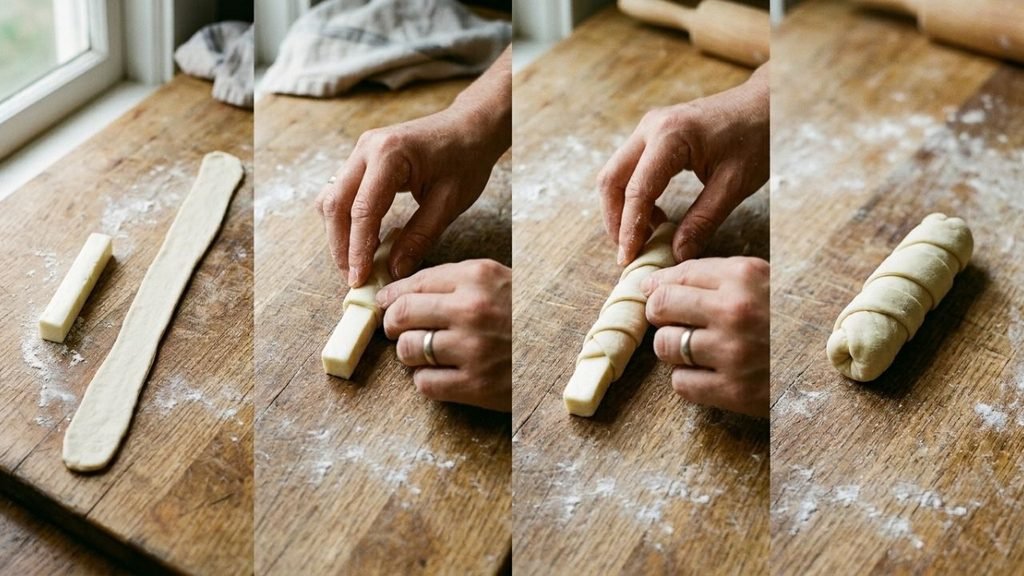
Place one strip over the end of a cheese stick, covering the end first. Wrap the dough diagonally around the cheese, overlapping each turn slightly as you move along its length. There should be no exposed cheese between the spirals.
When you reach the other end, cover that end completely and pinch the dough closed. Press along the seam with your fingers so there are no obvious gaps.
Don’t make the mistake of thinking that simply touching the dough together counts as sealing it. The edges need to adhere.
Place the finished tequenos on a tray and chill them for around 15–30 minutes before frying. If you prepare them well ahead, they can be frozen and fried later.
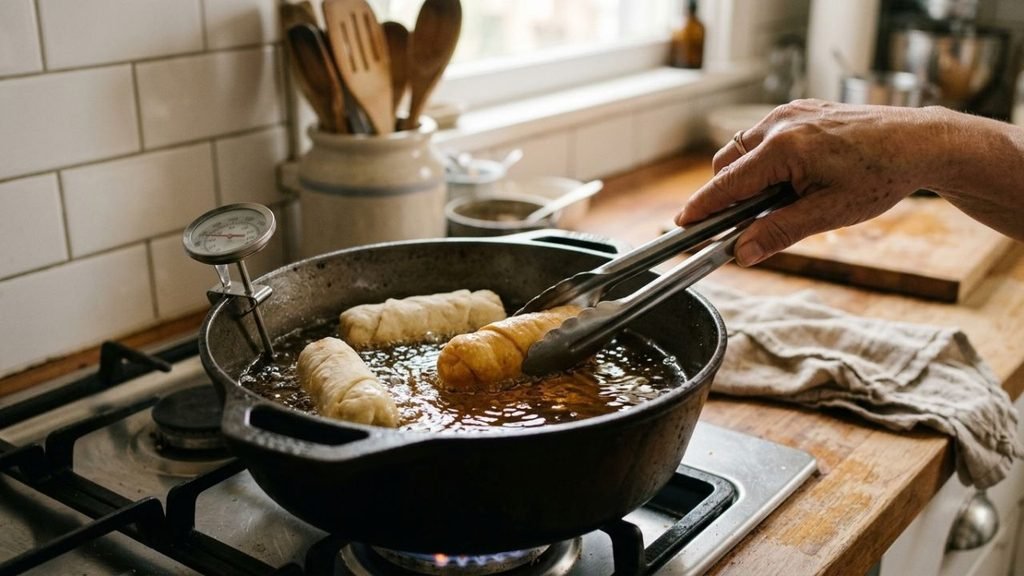
For frying, heat enough neutral oil to comfortably surround the tequenos to about 350°F (175°C). That falls within the general temperature range the USDA’s guidance on deep-fry thermometers and frying temperatures describes for deep-frying. Fry only a few at a time so the temperature doesn’t collapse when the cold dough enters the oil.
Cook until the outside is evenly golden and crisp, usually around 2–4 minutes depending on their size and the temperature of the oil. Turn them as needed so the color develops evenly.
If the oil temperature drops dramatically, the dough can take longer to crisp and absorb more oil. If it is excessively hot, the exterior may brown before the cheese has warmed properly.
Drain the finished tequenos briefly on paper towels and allow them to cool for a minute or two before serving.
Give the crisp shell something fresh to meet
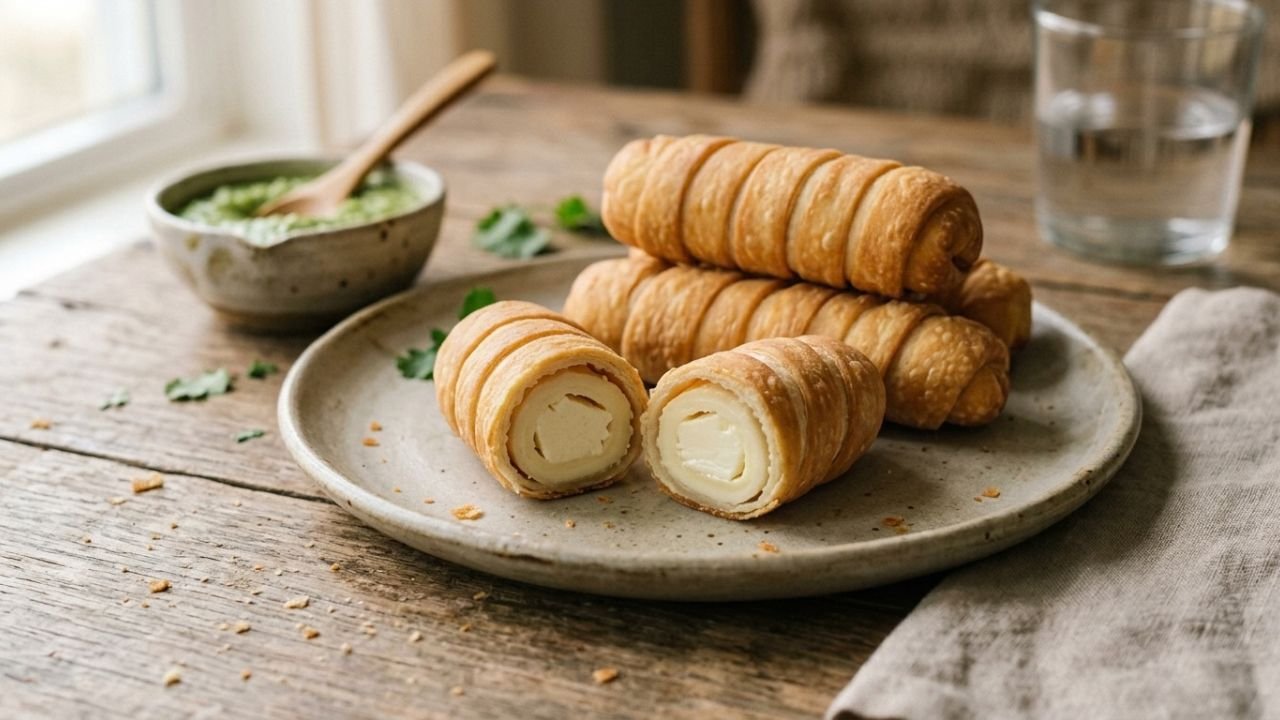
tequenos are best served warm, when the exterior is still crisp and the cheese has softened inside.
Guasacaca is a natural pairing, particularly if you want something fresh and acidic alongside the richness of the fried dough and cheese. Garlic aioli, a mild hot sauce, or a simple avocado-based dip can work too.
For a party, serve them on a broad platter rather than stacking them deeply. A pile of freshly fried tequenos traps steam between the pieces, which can soften the crisp exterior you worked to create.
Keeping a batch for later
Uncooked wrapped tequenos are particularly convenient for make-ahead cooking. Arrange them in a single layer and freeze until firm before transferring them to a sealed container or freezer bag.
They can generally be kept frozen for several months, depending on your freezer and how well they are packaged. That is a practical range rather than a guarantee, so use your own judgment about freezer condition and quality.
Cooked leftovers can be refrigerated in an airtight container for a few days. Again, the exact window depends on how quickly they were cooled, how cold your refrigerator stays, and how they were stored.
For reheating, an oven or air fryer is preferable to a microwave because dry heat helps bring back some of the crispness. Reheat until warmed through rather than leaving them in long enough to dry out the cheese.
The mistakes that usually expose the cheese
The dough isn’t overlapping enough.
The spiral needs to overlap from one turn to the next. Any exposed line of cheese is effectively an opening waiting to become a leak.
The ends are only pressed lightly.
The ends need particular attention because they have fewer layers of dough protecting the filling.
The cheese is too wet.
Excess moisture can make the filling behave unpredictably once heated. Pat the cheese dry before wrapping.
The dough is too thick.
A thick wrapper takes longer to cook through and changes the balance between crisp dough and melted cheese.
The oil is too cool.
The tequeños stay in the oil longer and can become greasy before the exterior properly crisps.
The oil is too hot.
The outside can brown too quickly while the center is still catching up.
The pot is overcrowded.
Adding too many cold tequeños at once causes the oil temperature to fall.
The wrapped tequeños are left warm for too long.
As the cheese warms before frying, it gets closer to its melting point. Keeping the assembled pieces cool gives you more control.
FAQ’s
1. Can I use mozzarella for tequeños?
Yes, but low-moisture mozzarella is a better choice than fresh mozzarella. It is firmer and contains less water, making it easier to work with.
2. Why did my tequeños burst?
The most common causes are an incomplete seal, insufficient overlap, cheese that melts very quickly, or oil conditions that give the dough too little time to set.
3. Should I freeze tequeños before frying?
You can fry them fresh, but chilling or freezing the assembled tequeños is useful when preparing them ahead and can make the pieces easier to handle.
4. What temperature should the oil be?
Around 350°F (175°C) is a practical target for many tequeño recipes. Keep an eye on the temperature between batches because adding cold tequeños will lower it.
5. Can I make tequeños ahead of time?
Yes. Freezing the uncooked, fully wrapped tequeños is one of the easiest ways to prepare them ahead for a party or gathering.
6. How do I stop cheese from leaking?
Focus on the whole chain rather than one trick: use firm cheese, keep it dry and cool, overlap the dough completely, seal both ends firmly, and maintain a steady frying temperature.
The small details are what make the difference
A good tequeño doesn’t require complicated cooking, but it does reward precision. The dough needs to be thin enough to crisp, the cheese needs to behave predictably, and the wrapping needs to close every possible escape route.
Once those details are under control, the result is exactly what the snack promises: a crisp, golden exterior followed by warm cheese instead of a puddle in the bottom of the pan.