fajita marinade are one of those dishes that people recognize before they even see the plate: strips of sizzling meat, charred peppers and onions, warm tortillas, lime and a few fresh toppings. The name is closely associated with faja, the Spanish word for a belt or sash, referring to the long, narrow shape of skirt steak traditionally used for fajitas. Today, the name covers many versions, from steak fajitas to chicken and vegetable variations, but the appeal remains the same: bold seasoning, browned edges and a meal that comes together around the table.
The problem with homemade fajitas is rarely the lack of seasoning. More often, the meat ends up tough, the vegetables turn soft, or the marinade overwhelms everything. This guide keeps things simple and shows where the small details actually make a difference.
The Small Details That Make Fajitas Taste Better
Start with the right cut
For classic steak fajitas, skirt steak is the natural choice. It has a loose texture and plenty of beefy flavor, which makes it particularly good with a quick marinade and high-heat cooking.
If skirt steak is unavailable, flank steak or sirloin flap can work well. The important thing is to avoid treating every cut in exactly the same way. A leaner cut can dry out quickly, while a thicker piece may need different cooking time.
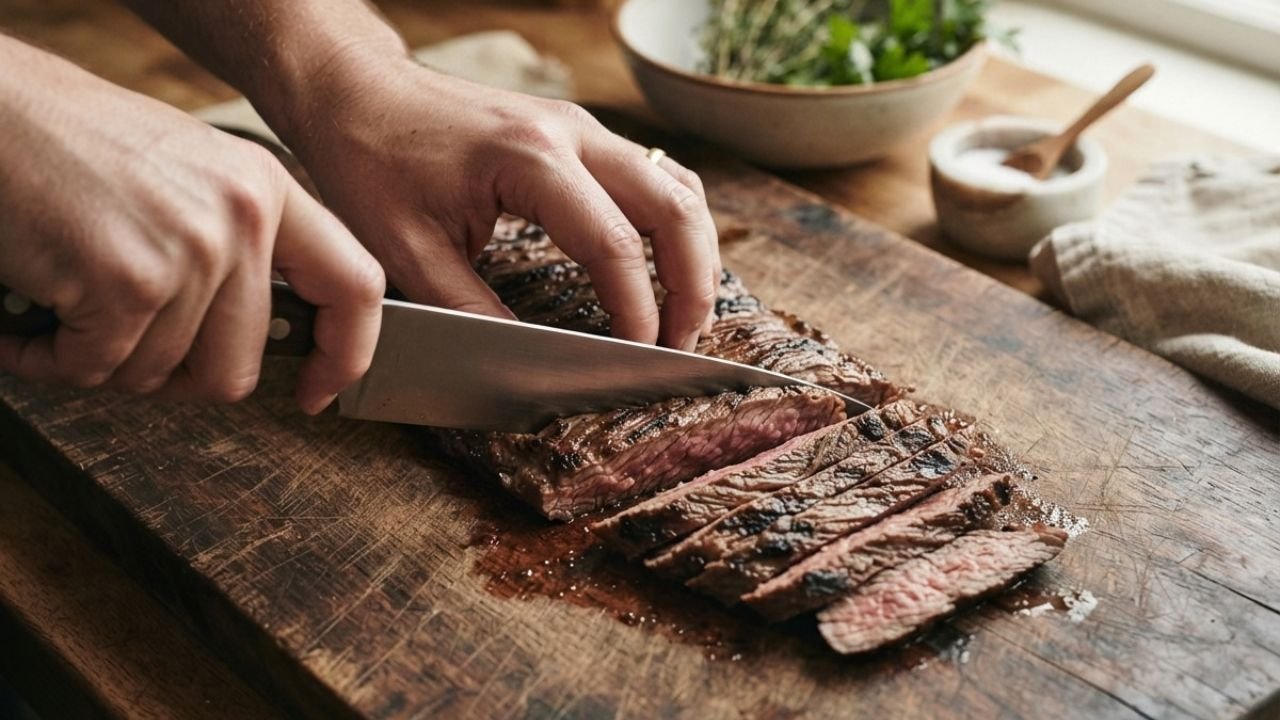
The biggest improvement comes after cooking look for the direction of the muscle fibers and slice across the grain. Cutting with the grain leaves those long fibers intact, which is one of the easiest ways to make otherwise good fajitas feel chewy.
Keep the marinade lively, not complicated
A good fajita marinade does not need a long ingredient list.
Fresh lime gives it brightness, garlic brings savory depth, cumin adds warmth, and chili powder gives the meat its familiar earthy heat. A little oil helps coat the steak, while salt does the basic seasoning work.
For 700 g / 1½ lb steak, combine:
- 3 tablespoons fresh lime juice
- 3 tablespoons oil
- 3 garlic cloves, minced
- 1 teaspoon ground cumin
- 1 teaspoon chili powder
- 1 teaspoon dried oregano
- 1 teaspoon salt
- ½ teaspoon black pepper
- 1 finely chopped jalapeño, optional
- 1 tablespoon chopped cilantro, optional
Mix everything well and coat the steak evenly. Keep the steak covered in the refrigerator while it marinates, rather than leaving it on the counter. The FDA’s broader food-safety guidance for handling raw meat is useful here, particularly when preparing marinades and keeping raw ingredients separate from ready-to-eat foods.
There is no need to turn the marinade into a sauce. Its job is to give the meat a fresh, savory layer of flavor that still leaves room for the char from the pan.
Give the lime some restraint
Lime is one of the easiest ingredients to overuse in fajitas.
A little acidity makes the meat taste brighter. Too much, especially over a very long marinade, can make the surface texture unpleasant and push the flavor toward sharpness.
For this reason, 30 minutes to 4 hours is a practical window for the marinade. If you’re preparing everything ahead, it is better to have the other ingredients ready separately than to leave the steak sitting in a strongly acidic mixture all day.
Get the pan properly hot
Fajitas need browning.
A heavy skillet, preferably cast iron, works particularly well because it holds heat when the meat hits the surface. The pan should be properly hot before the steak goes in.
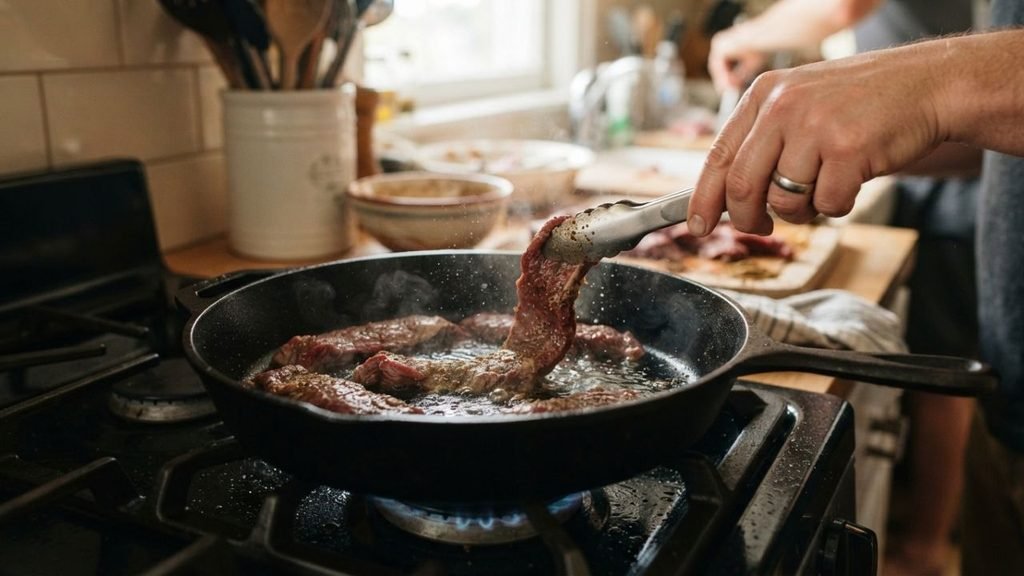
Also avoid filling the pan with too much meat at once. Crowding creates steam, and steam is the enemy of the browned edges that give fajitas their character.
Cook in batches if necessary. It takes a few extra minutes but produces a much better result.
Treat the vegetables as their own ingredient
Peppers and onions do more than add color.
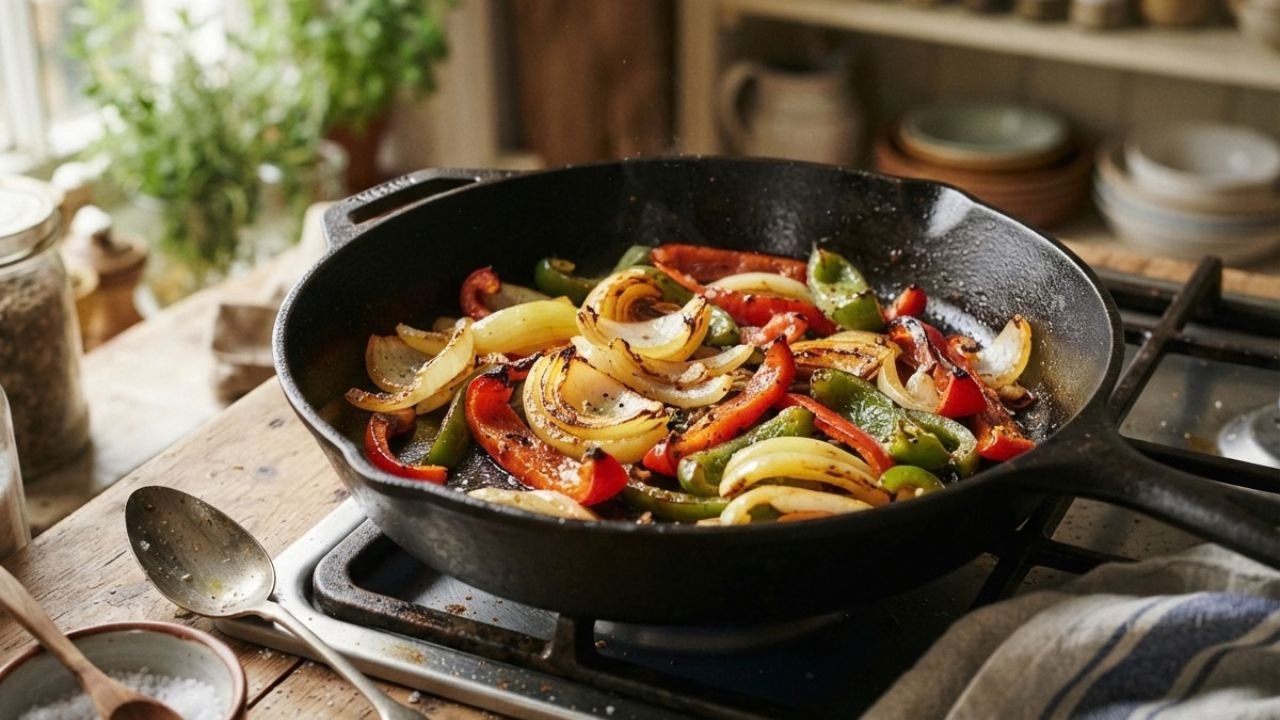
The onions become sweeter as they brown, while peppers develop char around the edges but can retain some bite in the center. Keeping them slightly firm gives the finished fajitas more contrast.
Cook them separately from the steak when possible. Once browned, set them aside and bring everything together briefly at the end.
That small separation gives both the meat and vegetables enough room to cook properly.
The Fajita Recipe Worth Keeping
The Steak and Marinade
- 700 g / 1½ lb skirt steak
- 3 tablespoons fresh lime juice
- 3 tablespoons oil
- 3 garlic cloves, minced
- 1 teaspoon cumin
- 1 teaspoon chili powder
- 1 teaspoon dried oregano
- 1 teaspoon salt
- ½ teaspoon black pepper
The Peppers and Onions
- 1 large onion, sliced
- 2 bell peppers, sliced
- 1 jalapeño, sliced, optional
- 1 tablespoon oil
- A pinch of salt
For serving
- Warm tortillas
- Lime wedges
- Pico de gallo
- Fresh cilantro
- Avocado or guacamole
- Salsa
A straightforward cooking sequence
Mix the marinade ingredients and coat the steak. Leave it for 30 minutes to 4 hours in the refrigerator.
Take the steak out and remove excess marinade from the surface. Heat a large skillet until very hot, then cook the steak until well browned and cooked to your preferred doneness. Transfer it to a board and let it rest.
Cook the onion and peppers in the same skillet until browned around the edges and still slightly firm.
Now look closely at the steak before cutting it. Find the direction of the grain and slice thinly across it. This is not a cosmetic detail, it changes how the meat feels when you eat it.
Return the sliced steak and vegetables to the pan for a brief toss. Finish with a squeeze of fresh lime and serve immediately with warm tortillas and your chosen toppings.
Where Most Fajitas Go Wrong
The first mistake is usually too much liquid in the pan. If the steak enters the skillet dripping with marinade, the surface has to evaporate that moisture before it can brown properly. A quick pat with a paper towel helps.
The second is cutting the steak immediately without looking at the grain. Skirt steak can have very visible fibers, so take a few seconds to identify their direction.
The third is trying to cook everything at once. Steak, peppers, onions and a crowded pan can quickly become a steaming mixture rather than a properly browned one.
And the fourth is treating the marinade as the main event. fajita marinade should taste of more than lime and garlic. The browned meat, sweet onion, fresh salsa and warm tortilla all have a role.
Small Changes That Give You Different Fajitas
Chicken fajita marinade are an easy variation. Use boneless chicken thighs when you want more forgiving meat and a richer result, or chicken breast for a leaner version. Keep the same basic marinade but pay closer attention to cooking time.
For a smokier version, add a little smoked paprika or use a smoky chile in the marinade.
For more heat, add fresh jalapeño or a hotter chile rather than simply increasing the chili powder. This gives you a clearer chile flavor instead of making the whole marinade taste dusty.
For a fresher plate, keep the cooked vegetables simple and add more brightness at the table with pico de gallo, cilantro and lime.
The useful idea is to change one element at a time. That way you can tell what actually improved the fajitas rather than piling different flavors on top of each other.
FAQ’s
1. What cut of meat is best for fajitas?
Skirt steak is the classic choice because it has strong beef flavor and a loose texture that works well with quick, high-heat cooking. Flank steak and sirloin flap are useful alternatives.
2. How long should fajita meat marinate?
For this lime-based marinade, 30 minutes to 4 hours is enough. Longer is not automatically better, particularly when the marinade contains a noticeable amount of acid.
3. Can the fajitas be made without a grill?
Yes. A very hot cast-iron or heavy skillet works well and makes it easier to control the cooking in a home kitchen.
4. Why are my steak fajitas tough?
The most common reasons are overcooking, using a naturally tougher cut without enough care, or slicing with the grain. With skirt steak, always check the grain before slicing.
5. Should peppers and onions be cooked with the steak?
They can be, but cooking them separately usually gives you better browning and more control. Combine them with the steak briefly once both are cooked.
The Best Fajitas Are About Restraint
A good plate of fajita marinade does not need to be complicated. The meat needs enough seasoning to taste interesting, enough heat to develop a browned surface, and a proper slice so it stays pleasant to eat. The vegetables should bring sweetness and texture rather than simply filling the pan.
Once those details are right, the rest can stay simple: a warm tortilla, something fresh, a little lime and enough salsa to make every bite different.
That is what makes fajita marinade useful as a weeknight meal. They feel generous without requiring a complicated recipe, and the difference between an ordinary version and a very good one often comes down to a few small decisions rather than more ingredients.