Silken bean curd, often called silken tofu or kinugoshi tofu in Japan, is prized for its soft, custard-like texture. Unlike firm tofu, it holds more moisture and needs gentler handling. The word “silken” can also describe different textures, so choosing the right type matters before you begin.
The problem is knowing which silken tofu to choose and how to handle it without losing its delicate texture. This guide makes that easier.
Timing at a glance
| Stage | Approx. time |
| Prep | 10 minutes |
| Cooking | 5–10 minutes |
| Total | 15–20 minutes |
These are useful working times rather than fixed rules. Your actual prep or cooking time can be shorter or longer depending on the tofu, your equipment, and how carefully you prefer to handle it.
What to have ready
- 1 block silken bean curd or silken tofu
- 1–2 tablespoons light soy sauce
- 1 teaspoon sesame oil
- 1 teaspoon finely grated fresh ginger
- 1–2 tablespoons finely sliced scallions
- A small amount of chili oil or chili crisp, if desired
- Toasted sesame seeds, for finishing
A few easy swaps
| If you don’t have | Try instead |
| Light soy sauce | Regular soy sauce, used a little more sparingly |
| Fresh ginger | A small amount of finely grated galangal |
| Sesame oil | A few drops of neutral oil if sesame flavor isn’t wanted |
| Scallions | Chives or very finely sliced shallot |
| Chili oil | Fresh chili or a pinch of chili flakes |
The substitutions are not identical, particularly with ginger and sesame oil. They work when the goal is to keep the dish balanced rather than reproduce exactly the same flavor.
The texture begins before the tofu reaches the plate
The first decision is the tofu itself.
If the tofu will be served almost intact, choose a soft silken variety. Its smoothness should be noticeable when you cut into it, and the block should hold together without feeling rubbery. If you are using it in a warmer dish where it will be moved around more, a firmer silken tofu is usually easier to manage.
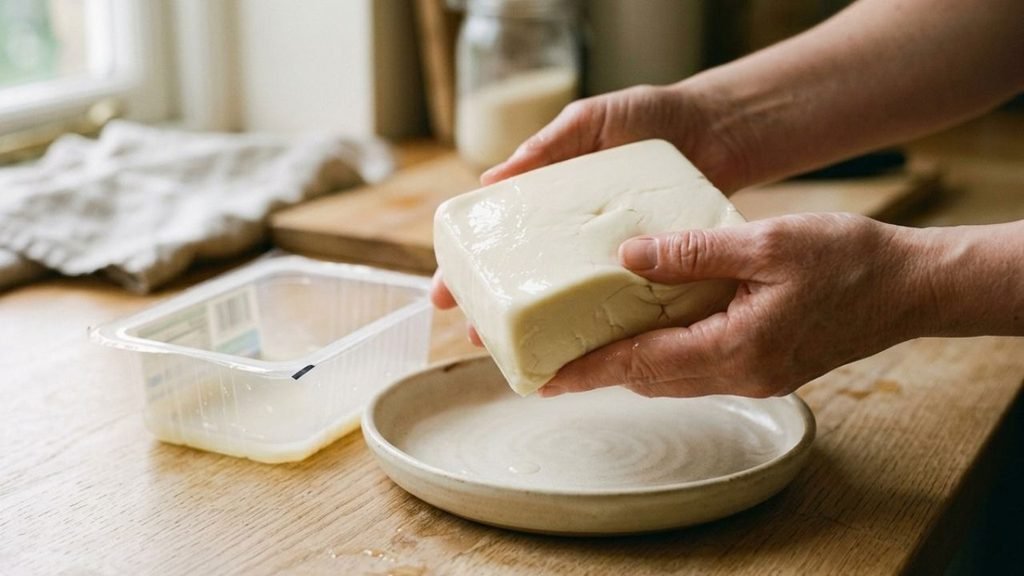
Once the package is open, resist the temptation to treat the tofu like a firm block. Do not squeeze it, press it heavily, or pick it up from one corner. Those small actions can fracture the structure.
Instead, open the package carefully and loosen the edges. If you need to remove the whole block, turn it onto a plate rather than trying to lift it by hand.
A little patience here makes a surprisingly large difference.
Keep the preparation gentle
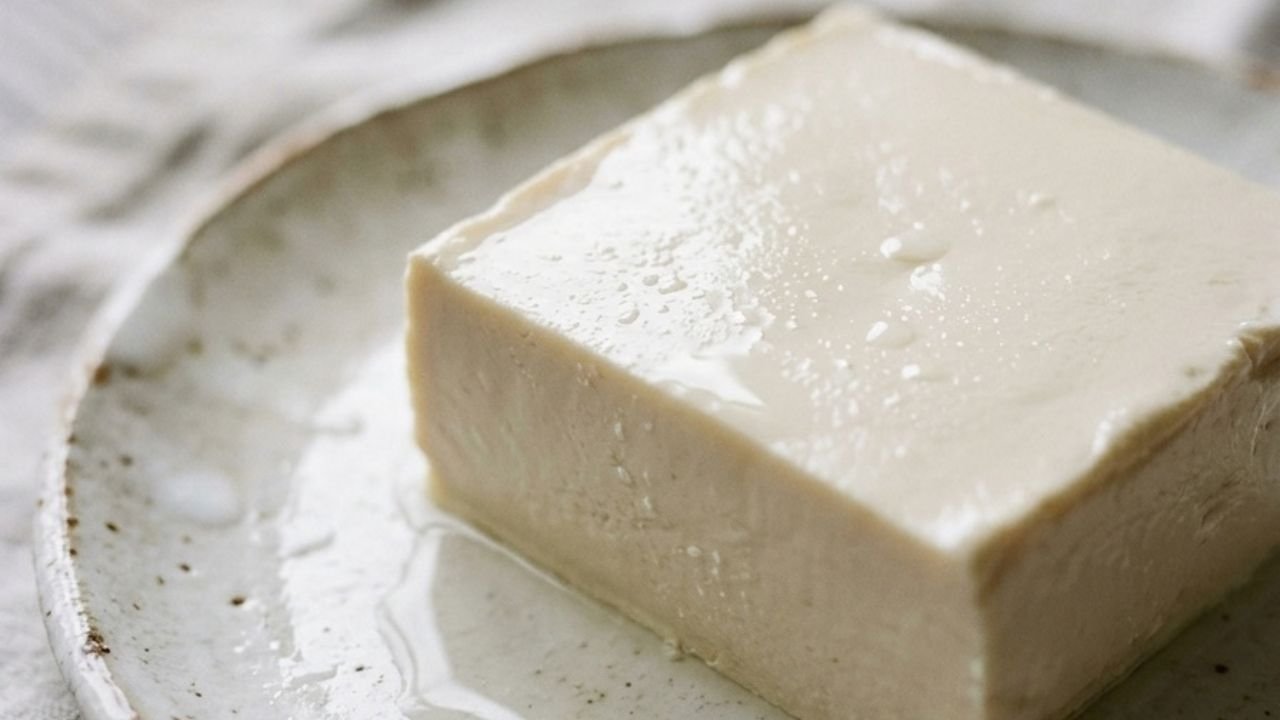
Place the tofu on a shallow serving plate and allow excess liquid to drain naturally for a few minutes. There is no need to force the water out. Silken tofu is supposed to contain plenty of moisture, and removing too much changes the very texture that makes it desirable.
If the block has released water onto the plate, carefully pour it away before finishing the dish.
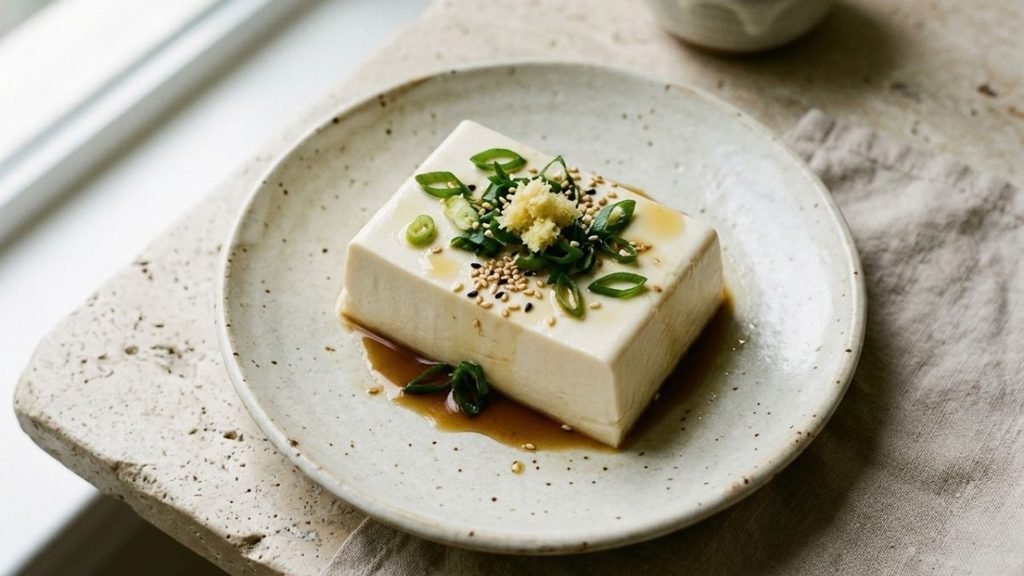
For a cold preparation, add the soy sauce around or lightly over the tofu rather than drowning the surface. Follow with sesame oil, ginger, scallions, and any other toppings you are using.
If you are warming the tofu, keep movement to a minimum. A spoon or spatula should support the pieces rather than constantly turning them over.
The goal is not to make the tofu firmer. It is to get it from package to plate with as much of its original structure intact as possible.
Why less handling usually works better
Silken tofu has a different relationship with moisture than firm tofu. With firm tofu, cooks often remove water because they want a denser interior that can brown or hold its shape. Silken tofu doesn’t offer the same opportunity, and trying to make it behave like firm tofu usually creates unnecessary problems.
That is why heavy pressing is one of the easiest mistakes to make.
A short, gentle drain can remove excess liquid. Pressing, squeezing, or wrapping it tightly can do much more than that, leaving you with a broken block and a texture that no longer feels silky.
There is also no need to stir it aggressively while warm. If the tofu breaks into smaller pieces, that may be perfectly acceptable in a soup or saucy dish, but it is a different result from keeping clean, soft pieces intact.
Serving it without hiding what you bought
Silken bean curd works best when the accompaniments provide contrast rather than competition. A little soy sauce brings salt and depth. Ginger gives freshness and heat. Scallions introduce a crisp, green note. Sesame oil adds aroma. Chili can bring another layer of heat if you want it.
The important part is restraint.
Because silken tofu has such a mild flavor, it can be tempting to cover it with strong sauces and toppings. But doing so can make the tofu itself disappear. A good serving should still allow you to notice the smoothness of the bean curd underneath everything else.
For a simple cold presentation, serve it on a chilled ceramic plate or shallow bowl. The clean surface makes the texture easier to see and keeps the dish from feeling crowded.
Storage is where texture becomes more complicated
Unopened tofu should be stored according to the package instructions. Once opened, keep any unused tofu refrigerated and follow the storage guidance provided with the product. If you are keeping it in water, use a clean sealed container and fresh water as needed rather than leaving the opened block exposed. For broader guidance on keeping perishable foods safely chilled, the FDA’s food-storage guidance explains why prompt refrigeration and proper refrigerator temperatures matter.
silken bean curd tofu is generally better eaten fresh. You can keep leftovers for a short period if they have been handled and refrigerated properly, but the exact usable time depends on the product, its packaging, and how it has been stored. Your own judgment should take those conditions into account rather than treating a fixed number of days as a guarantee.
The mistakes that quietly ruin silken tofu
Pressing it like firm tofu.
This is probably the most common mistake. Silken tofu does not need to be squeezed dry simply because firm tofu often is.
Choosing the softest tofu for every dish.
Extremely soft tofu is wonderful when texture is the focus, but a firmer silken variety may be easier to handle in a hot or heavily sauced dish.
Cutting it too aggressively.
A sharp knife helps, but even a good knife cannot prevent damage if the block is being pushed around.
Adding too much liquid.
The tofu already contains a lot of moisture. Excess sauce can leave the plate watery and dilute the flavor.
Stirring constantly.
Warm silken tofu does not need the same agitation as firmer ingredients. Move it only when necessary.
Freezing it when you want silkiness.
Freezing can change tofu’s internal structure and create a more porous, chewy texture after thawing. That can be useful for some tofu preparations, but it moves the ingredient away from the smooth quality you’re trying to preserve here.
FAQ’s
1. Is silken tofu the same as soft tofu?
Not always. The terminology varies between brands and regions. “Silken” generally refers to the smooth, delicate style, while “soft” can describe a broader range of tofu textures.
2. Should silken tofu be pressed?
Usually, no. A gentle drain is enough when excess liquid is a concern. Heavy pressing can damage its delicate structure.
3. Can silken tofu be cooked?
Yes. It can be warmed, simmered, or incorporated into hot dishes. The important difference is that it needs gentler handling than firm tofu.
4. Why does my silken tofu fall apart?
It may be extremely soft, over-handled, cut too roughly, or moved too much during cooking. Some brands are also simply more delicate than others.
5. Can I substitute firm tofu for silken tofu?
You can, but the result will change. Firm tofu has a denser, chewier structure and will not give the same custard-like texture.
The point is to preserve what makes it delicate
Silken bean curd rewards a different kind of cooking discipline. With many ingredients, more handling, more heat, or more seasoning can create more character. Here, restraint often does the opposite: it protects the character that was already there.
Choose the texture according to the dish, handle the block gently, remove only the moisture you actually need to remove, and let the tofu remain visible rather than burying it under sauce.