Queso, the Spanish word for cheese, has become closely associated in the United States with warm, Tex-Mex-style cheese dips served alongside tortilla chips. Often called beef queso dip recipe or simply chili con queso when chiles are part of the mix, it comes in many forms, from restaurant-style cheese sauces to heartier versions loaded with ground beef. The appeal is easy to understand: browned meat adds a savory bite, melted cheese brings a creamy texture, and tomatoes and green chiles keep the combination from tasting too heavy. It is familiar party food, but a well-made bowl has a balance that makes it particularly hard to leave alone.
The trouble starts when the cheese turns greasy, the dip becomes too thick to scoop, or the beef leaves a layer of excess fat on the surface. Getting that creamy consistency right is what separates a genuinely good queso from one that looks promising but disappoints after a few minutes.
The Small Details Behind Better Beef Queso
Choose cheese for its melting quality
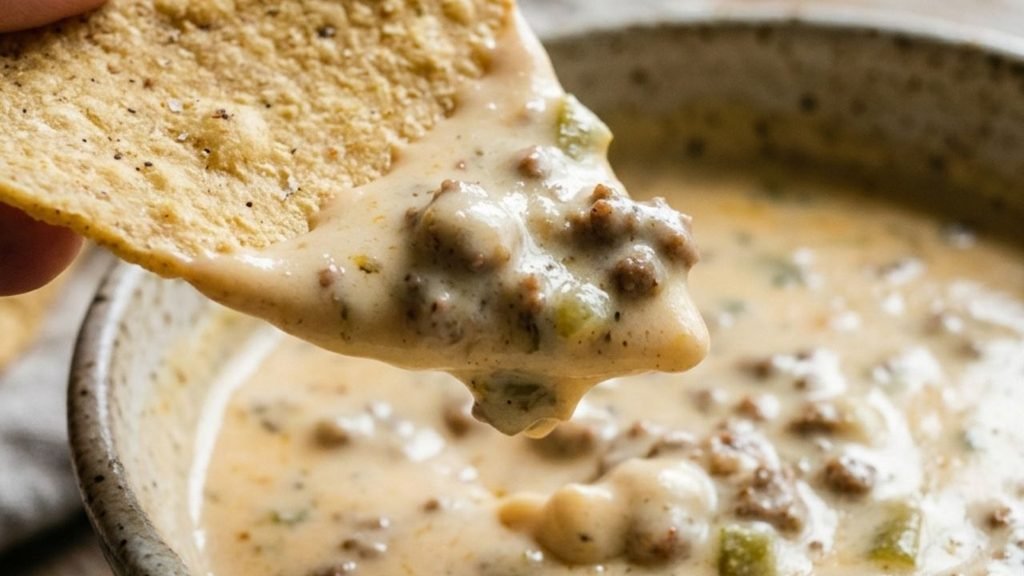
The cheese determines how the dip behaves as much as how it tastes. Processed melting cheese is useful for creating a smooth, consistent base, while Monterey Jack adds a mild dairy flavor without overpowering the beef and chiles.
For a more pronounced cheese flavor, freshly grated Monterey Jack can be combined with a little cheddar. Keep in mind that cheddar, particularly aged varieties, can become grainy or release oil when overheated. A mixture designed for smooth melting is generally more dependable than using a large quantity of strongly flavored cheese alone.
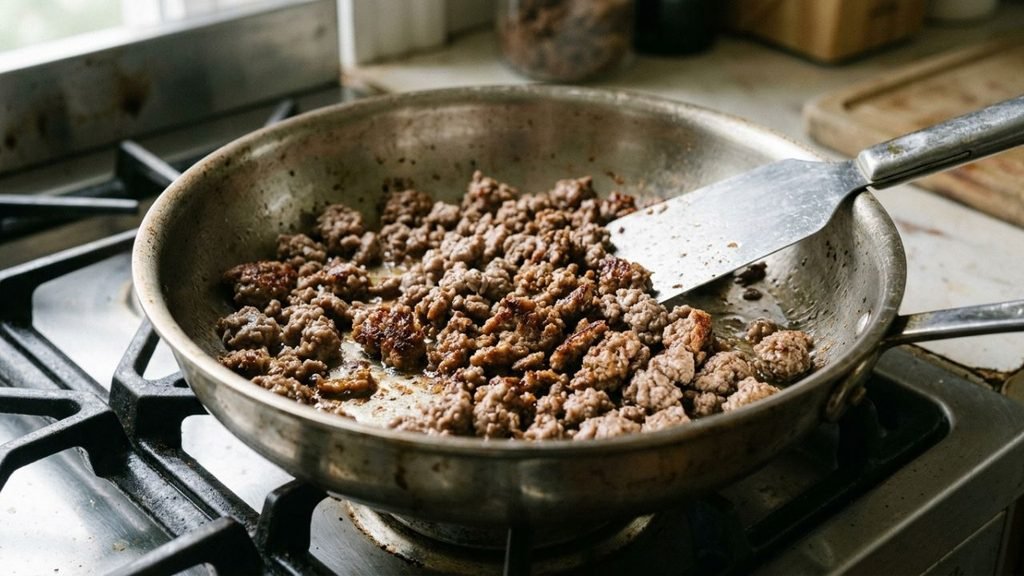
Brown the beef instead of steaming it
Ground beef tastes different when it develops browned edges. Spread it across a hot skillet and give it time to brown before breaking it up and stirring continuously. If the pan fills with liquid, allow that moisture to evaporate before continuing.
Once cooked, drain excessive grease. A little fat helps carry the flavor of the seasoning, but a pool of it can leave the finished queso oily. For safe handling, cook ground beef to the recommended internal temperature and follow the USDA’s ground beef safety guidance.
Keep the heat gentle
High heat is one of the easiest ways to spoil a cheese dip. Once the cheese begins melting, lower the temperature and stir regularly. The sauce should become smooth without boiling.
If the mixture starts looking oily or grainy, remove it from the heat and stir in a small splash of warm evaporated milk. This may help restore its consistency, although a badly separated sauce is not always recoverable.
Building Flavor Without Losing the Creaminess
Give the seasoning a moment in the pan
Cumin, garlic, smoked paprika and chili powder work particularly well with ground beef. Add them after the meat has browned, stirring briefly before incorporating the cheese. This helps distribute the seasoning through the meat rather than leaving isolated pockets of spice in the finished queso dip recipe.
Diced tomatoes with green chiles provide acidity and mild heat. Their liquid also loosens the cheese mixture, so drain them only if your particular dip is already too thin.
Adjust thickness one spoonful at a time
A queso dip should coat a tortilla chip without becoming a solid mound. If it is too thick, add warm evaporated milk a tablespoon at a time, stirring after each addition. If it is too loose, allow it to cook gently for a few minutes while stirring.
Avoid adding a large amount of liquid at once. It is much easier to thin a thick dip gradually than to correct a sauce that has become watery.
Finish with something fresh
The beef and cheese supply most of the richness, so a fresh topping provides welcome contrast. Chopped cilantro, diced tomatoes or sliced jalapeños add color and a sharper flavor. A small squeeze of lime can also brighten the finished dip.
Keep these additions restrained. The purpose is to complement the queso, not cover up its cheese flavor.
Serving It While the Texture Is Right
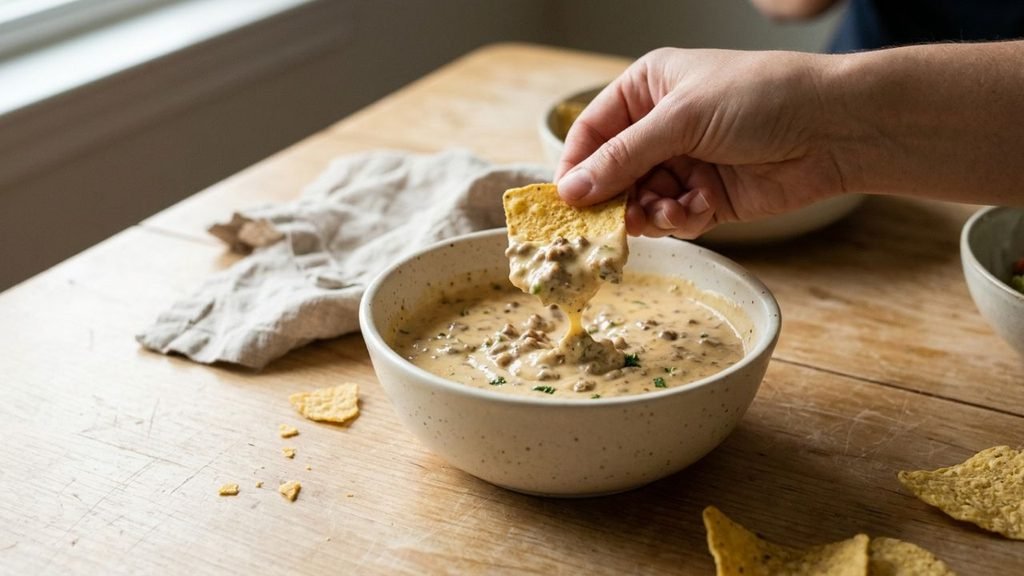
Queso thickens as it cools, which is why a dip that looks perfect in the kitchen can become difficult to scoop on the table. Serve it in a prewarmed bowl or use a slow cooker on an appropriate low-warming setting. Stir occasionally and add a little warm milk if the consistency tightens.
Sturdy tortilla chips are the most practical choice for a beef-filled dip. Thin chips tend to break under the weight of the meat, particularly when the queso dip recipe is thick. Bell pepper strips and cucumber slices provide lighter alternatives for guests who want something crisp.
For a larger spread, serve the dip alongside salsa or fresh pico de gallo. Their acidity offers a contrast to the creamy cheese, and the additional options make the table feel more varied without requiring another rich dish.
Common Queso Problems and Their Fixes
- The dip looks oily: Lower the heat and stir in a small splash of warm evaporated milk. Next time, reduce excess beef grease before adding the cheese.
- The sauce is too thick: Add warm milk gradually until it flows from a spoon.
- The cheese tastes bland: Check the salt first, then adjust the cumin, chili powder or jalapeños. Processed cheese can already be salty, so taste before seasoning.
- The beef overwhelms the cheese: Break the meat into smaller pieces and distribute it evenly. Too much beef can turn a creamy dip into a dense mixture.
- The dip becomes stiff on the table: Keep it gently warm and stir periodically. Avoid prolonged high heat, which can damage the texture.
FAQ’s
1. Can queso dip be made ahead?
Yes. Cook the beef and onion mixture in advance, refrigerate it promptly, and prepare the cheese sauce closer to serving. Fully prepared leftovers can also be refrigerated and reheated gently.
2. Which ground beef works best?
Ground beef with moderate fat content provides a good balance of flavor and texture. Fattier beef can work, but drain excess grease before adding the cheese.
3. Can cheddar replace processed melting cheese?
It can be used in a different cheese-sauce formulation, but a direct, equal-weight substitution may produce a grainier dip. Processed melting cheese is more forgiving when a smooth party-style texture is the priority.
4. How can the dip be made spicier?
Add finely chopped jalapeños, extra chili powder or a little chipotle. Introduce the heat gradually and taste as you go.
5. Can queso dip be reheated?
Yes. Reheat it gently, stirring regularly and adding a little milk if necessary. Reheat leftovers to 165°F (74°C).
6. What is the best way to keep queso warm?
A slow cooker on a low warming setting can help maintain serving temperature. Stir periodically, avoid overheating, and follow safe food-handling practices during longer gatherings.
A Bowl That Gets the Details Right
Creamy queso dip recipe with ground beef does not need elaborate presentation or a long list of unusual ingredients. Its success comes from the relationship between the browned beef, the melting cheese and the gentle heat that holds everything together. When those elements are balanced, the dip feels rich without becoming greasy, flavorful without being overpowering, and substantial enough to serve at a gathering.
Serve it warm, keep sturdy chips within reach, and make small adjustments when the texture changes. That is what makes this familiar favorite worth bringing back to the table.