Corned beef sandwiches are a familiar sight in American delis, where thin slices of seasoned beef are often served between rye bread with mustard or pickles. The name comes from the traditional use of coarse salt, known as “corns” of salt, to cure the beef. Over time, corned beef became closely associated with deli sandwiches, especially the classic New York-style version, where the meat takes center stage.
Keeping corned beef tender while preventing soggy bread and overpowering toppings can be tricky. This guide shows you how to get the balance right.
Preparation and Cooking Time
| Preparation | Cooking | Total time | Servings |
| 10 minutes | 5–8 minutes | 15–18 minutes | 2 sandwiches |
These times are estimates for assembling and warming precooked corned beef. Your actual time may vary depending on how cold the meat is, the type of bread you use, and how crisp you prefer your sandwich.
Ingredients for a Well-Balanced Sandwich
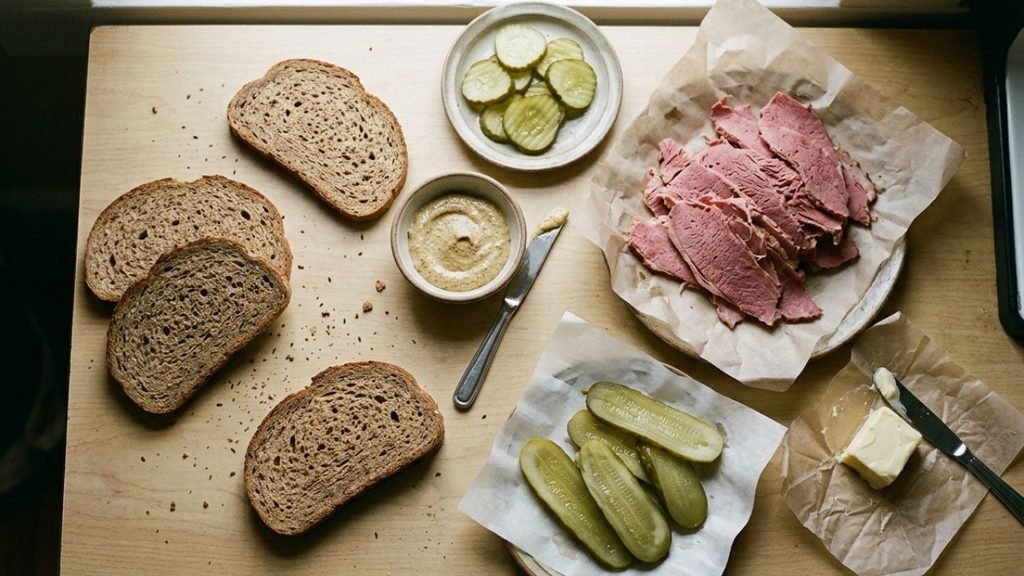
- 250–300 g cooked corned beef, thinly sliced
- 4 slices rye bread or sourdough
- 2–3 teaspoons Dijon or yellow mustard
- 2–4 dill pickle slices, drained
- 2 slices Swiss cheese (optional)
- 1 tablespoon butter, for grilling
- Black pepper, to taste
Simple Substitutions That Still Work
| Ingredient | Substitute | What changes |
| Rye bread | Sourdough or sturdy white bread | Sourdough adds tang; white bread has a milder flavor. |
| Dijon mustard | Yellow or whole-grain mustard | Yellow is milder, while whole-grain adds texture. |
| Dill pickles | Pickled onions | Onions offer a sharper, slightly different acidity. |
| Swiss cheese | Provolone or no cheese | Provolone gives a milder, creamier result; skipping cheese keeps the sandwich lighter. |
| Butter | Olive oil | Olive oil works for grilling, although the crust will taste different. |
Directions
The aim is to warm the beef without drying it out, crisp the bread without burning it, and keep the sharper ingredients noticeable in every bite. Prepare the filling before heating the bread so the sandwich comes together quickly.
1. Warm the Corned Beef Gently
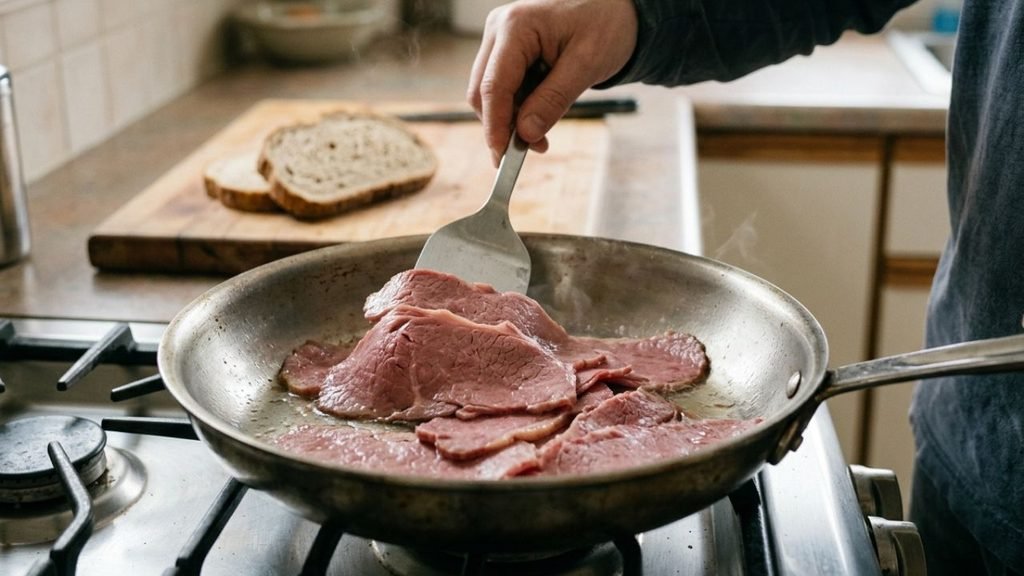
Separate the corned beef slices and place them in a skillet over low heat. Add a small splash of water, cover, and warm for a few minutes until heated through.
Avoid frying the meat for too long. Corned beef is already seasoned, and excessive heat can leave thin slices dry and chewy.
2. Prepare the Bread and Mustard
Spread a thin layer of mustard over the inside of each bread slice. Use enough to provide a noticeable tang without overwhelming the beef.
If you’re using Swiss cheese, keep it ready to place over the warm meat during assembly.
3. Assemble the Filling
Divide the warm corned beef between two slices of bread. Add the cheese, if desired, followed by the drained pickle slices and a little black pepper.
Keep the filling evenly distributed rather than stacking everything in the center. This makes the sandwich easier to handle and helps each bite contain a balanced amount of meat and toppings.
4. Grill Until the Bread Turns Golden
Melt the butter in a skillet over medium-low heat. Close the sandwiches and cook for around 2–4 minutes per side, pressing gently with a spatula.
Turn the heat down if the bread browns too quickly. The finished sandwich should have a crisp, golden exterior and a warm filling, with melted cheese if you’ve included it.
5. Cut and Serve
Remove the sandwiches from the skillet and let them rest for about a minute. Cut each one in half with a sharp knife and serve while the bread is still crisp.
Serving Ideas That Complement the Beef
A corned beef sandwich is filling enough to stand on its own, but a simple side can make it a more complete meal.
- Dill pickle spears: Their sharp, sour flavor balances the saltiness of the beef.
- Potato chips: A crisp, lightly salted option adds crunch without requiring extra preparation.
- Coleslaw: A fresh cabbage slaw brings texture and acidity. Keep the dressing light so the meal doesn’t become too rich.
- Potato salad: A good choice for a more substantial lunch, particularly alongside a simple mustard-based sandwich.
- A bowl of soup: Tomato or vegetable soup pairs well with a warm, grilled sandwich, especially in cooler weather.
For the sandwich itself, serve extra mustard on the side rather than adding too much to the filling. This lets everyone adjust the sharpness to their preference.
Storage and Reheating Without Losing Texture
A corned beef sandwich is best assembled shortly before serving because moisture from the meat, pickles, and sauces can soften the bread. If you’re preparing lunch ahead, keeping the components separate generally gives you a better result.
Cooked corned beef can usually be refrigerated in a covered container for three to four days, provided it was handled safely and refrigerated promptly. For more details on safe storage times for cooked leftovers, consult the USDA Food Safety and Inspection Service’s official Leftovers and Food Safety guidance. Your actual storage time depends on how fresh the meat was when you prepared it and how consistently it has been kept cold. When in doubt, discard it rather than relying on smell alone
For reheating, warm the beef separately in a covered skillet with a small splash of water. Toast or grill fresh bread, then assemble the sandwich. This helps preserve the contrast between tender meat and crisp bread.
If you’ve already assembled the sandwich, you can warm it in a skillet over low heat, turning it carefully. The bread may soften, particularly if the filling contains wet ingredients, so freshly assembled sandwiches generally give the best texture.
Common Mistakes That Take Away the Flavor
Using too much mustard. Mustard should sharpen the meat’s flavor, not hide it. Begin with a thin layer and add more only if needed.
Skipping the pickles or another acidic ingredient. Corned beef is naturally salty and savory. A little acidity helps balance those flavors and keeps the sandwich from tasting one-dimensional.
Heating the beef too aggressively. Thin slices don’t need prolonged cooking. Warm them gently to preserve their tenderness.
Adding wet toppings straight from the container. Excess pickle brine or sauerkraut liquid can soak into the bread. Drain wet ingredients before assembly.
Choosing bread that cannot support the filling. Very soft bread can collapse under warm meat and sauces. Rye, sourdough, or another sturdy loaf usually provides better structure.
Overfilling the sandwich. A large mound of beef may look generous, but it can make the sandwich difficult to bite through. Spread the meat evenly for a more comfortable result.
Seasoning before tasting. Corned beef has already been cured with salt. Taste the assembled filling before adding any extra seasoning.
FAQ’s
1. What bread works best for a corned beef sandwich?
Rye is a traditional choice because its earthy flavor complements the seasoned beef. Sourdough is another good option, while sturdy white bread works when you prefer a milder taste.
2. Should corned beef be served hot or cold?
Both work well. Warm corned beef is especially good in a grilled sandwich with melted cheese, while cold slices suit a simple sandwich with mustard and pickles.
3. How do you keep a corned beef sandwich from getting soggy?
Drain pickles and other wet toppings, use sauces sparingly, and assemble the sandwich shortly before eating. If you’re packing it for later, keep the wet ingredients separate until you’re ready to eat.
4. Can leftover corned beef be used?
Yes. Leftover cooked corned beef works well when sliced thinly and warmed gently. Make sure it has been stored safely, and avoid heating it for longer than necessary.
5. Is cheese necessary for a flavorful corned beef sandwich?
No. Swiss cheese is common in Reuben-style sandwiches, but mustard, pickles, and well-prepared beef can provide plenty of flavor without it.
A Simple Sandwich Worth Getting Right
A flavorful corned beef sandwich doesn’t need a long list of ingredients or complicated preparation. Tender meat, bread that holds together, a little mustard, and something sharp or crunchy can be enough to make every bite satisfying.
Start with those basics, taste as you go, and add cheese or other toppings according to your preference. The best version is the one where the beef remains the focus and every extra ingredient has a purpose.