The Manhattan is one of New York’s best-known classic cocktails, closely tied to the city’s drinking culture in the late nineteenth century. Its exact origins remain uncertain, but its familiar identity has stayed much the same over time. It is a dark, refined cocktail served in a small glass, often finished with a cherry.
Getting a Manhattan too sweet, too strong, or lacking that smooth finish can be frustrating. This recipe helps you find a better balance without losing the drink’s classic character.
Timing at a glance
| Preparation | Mixing | Total time |
| 5 minutes | 2–3 minutes | About 7–8 minutes |
These times are only a guide. You may take less or more time depending on how quickly you measure, prepare the glass, handle the ice, and put everything together.
What you need for the classic pour
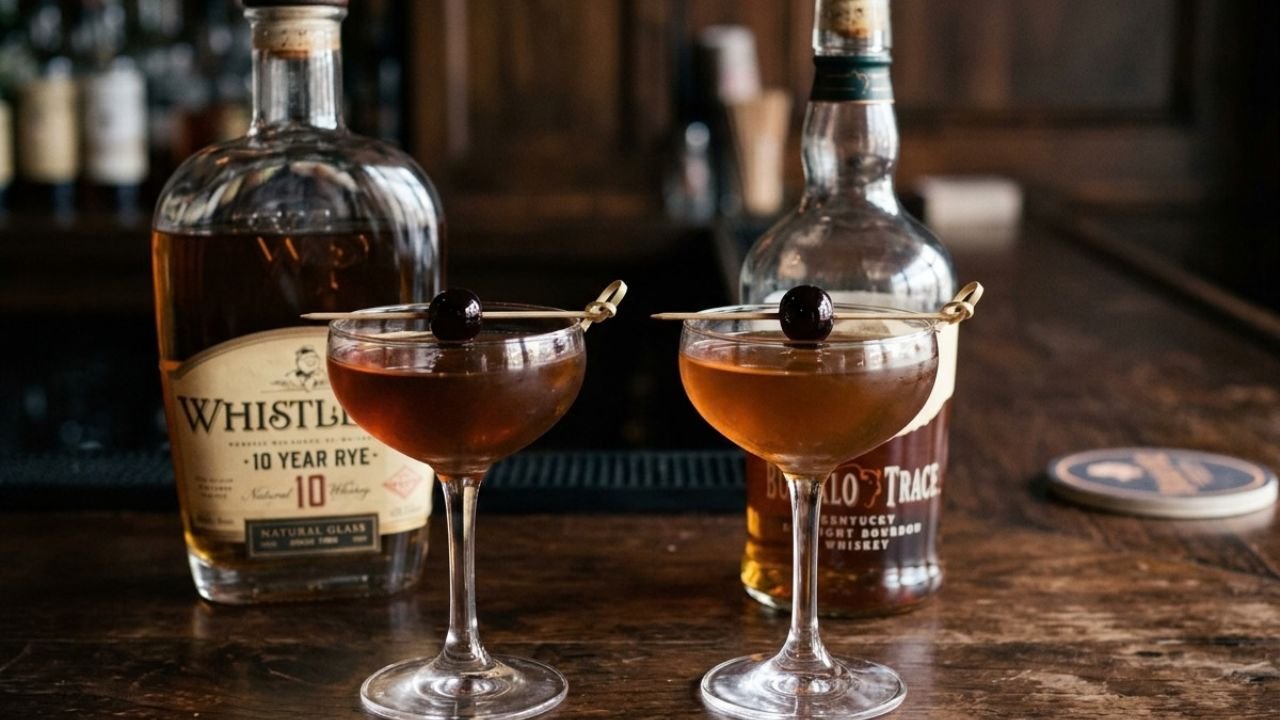
- 2 oz rye whiskey
- 1 oz sweet vermouth
- 2 dashes Angostura bitters
- Ice, for stirring
- 1 maraschino cherry, for serving
- 1 strip of lemon peel, optional
The measurements are intentionally simple. Manhattan does not need a crowded bar cart or a long list of additions. The character comes from how these few ingredients work together.
Rye whiskey gives the drink its firm, spicy backbone, while sweet vermouth brings a softer herbal and slightly sweet character. Bitters add another layer without turning the drink into something complicated.
When one bottle is not an option
Some home bars will not have every traditional ingredient available. Substitutions can work, but they should be made with an understanding that the final drink will change slightly.
| Original ingredient | Possible replacement | Difference you may notice |
| Rye whiskey | Bourbon | Softer, rounder and generally sweeter |
| Sweet vermouth | Another sweet red vermouth | Similar structure, but the herbal and sweet notes may differ |
| Angostura bitters | Aromatic bitters | The spice and aromatic character will change |
| Maraschino cherry | Cocktail cherry | Similar purpose, with possible differences in sweetness and texture |
If rye is unavailable, bourbon is the easiest substitution. It still gives you the recognizable shape of a Manhattan, but the result will usually feel softer. If your goal is a sharper, more spice-driven drink, rye remains the better fit.
Directions
The technique here is deliberately quiet. There is no need to complicate a cocktail that depends on a small number of ingredients. The important part is giving the drink enough chilling and dilution to soften the whiskey without allowing the finished cocktail to become watery.
1. Prepare the glass
Chill your cocktail glass before making the drink. You can place it in the freezer for a few minutes or fill it with ice while preparing the Manhattan, then empty it before serving.
A cold glass helps the finished drink stay pleasant for longer and keeps the first sip from feeling warmer than expected.
2. Add the ingredients
Fill a mixing glass with ice. Add the rye whiskey, sweet vermouth, and bitters.
There is no need to add the cherry or lemon peel at this stage. They belong at the end, where their aroma and flavor can be controlled more easily.
3. Stir until properly chilled
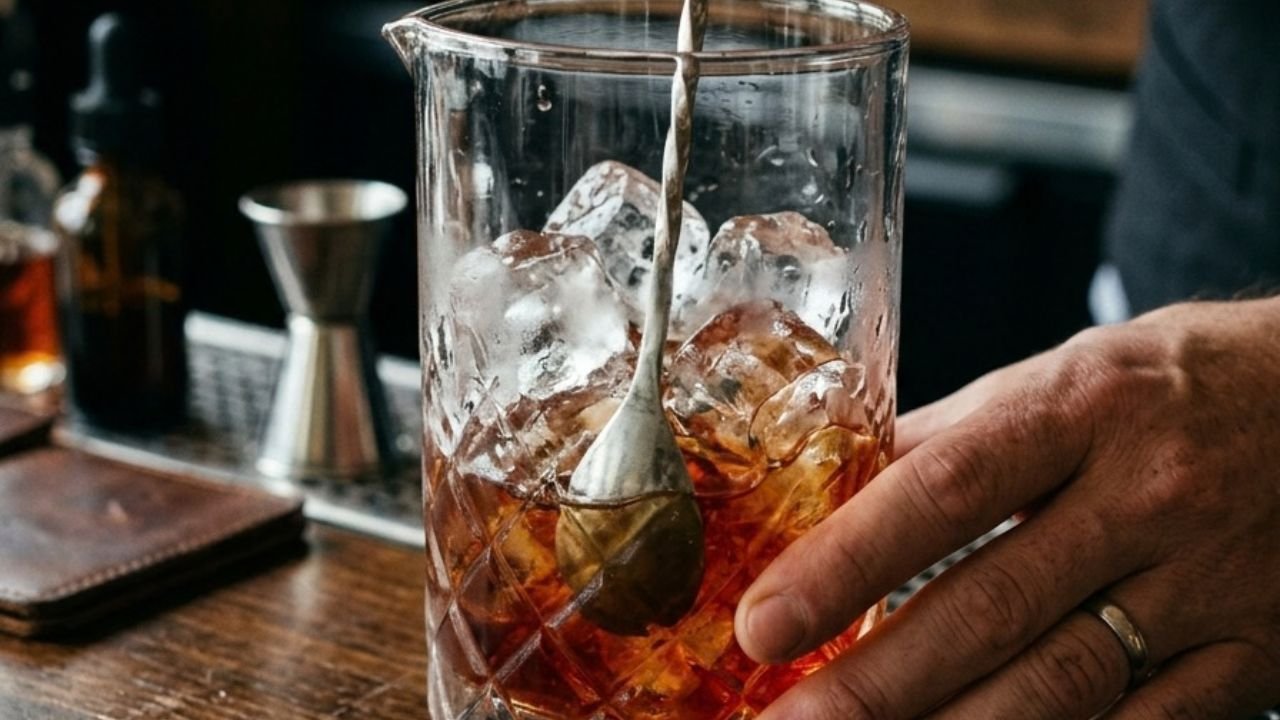
Use a bar spoon to stir the mixture steadily with the ice.
The purpose is not simply to make the drink cold. As the ice melts slightly, it introduces a small amount of water into the cocktail. That dilution softens the alcohol and allows the whiskey and vermouth to sit together more naturally.
4. Strain
Strain the drink into your chilled cocktail glass.
Do not leave the finished Manhattan sitting over melting ice. Once the drink has reached the level of dilution you want, separating it from the ice keeps the texture and flavor from continuing to change.
5. Finish the glass
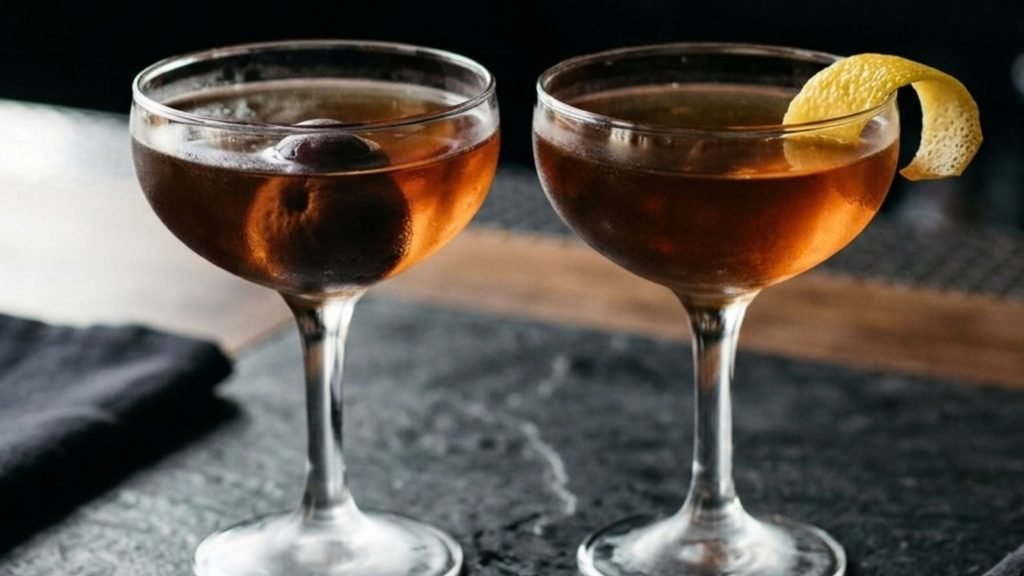
Add a maraschino cherry.
If you prefer a fresher aroma, use a strip of lemon peel instead. Twist the peel over the surface of the drink to release its oils, then place it in the glass or remove it according to your preference.
What makes the drink feel smoother
Smoothness is often mistaken for sweetness, but they are not the same thing.
A Manhattan can be smooth while still tasting distinctly of rye whiskey. The difference comes largely from temperature and dilution. Whiskey served without enough dilution can feel hot and aggressive, while too much dilution can leave the drink thin and lacking in character.
The vermouth also plays an important role. Because vermouth is an aperitif wine, made from a wine base and flavored with herbs and other aromatics, it contributes a different kind of sweetness and complexity from the whiskey. It should soften the whiskey without completely covering it. If the vermouth becomes the dominant flavor, the drink can feel heavy rather than smooth.
This is why the balance between the ingredients matters more than simply adding something sweet whenever the cocktail tastes sharp.
The garnish has a small job
The maraschino cherry is the classic visual finish, and for many people it is part of what makes Manhattan immediately recognizable.
But it should not be expected to repair the drink.
A good cherry adds a final touch of sweetness and fruitiness. A lemon peel does something different, bringing a brighter citrus aroma before the first sip. Both are useful, but neither replaces good balance in the cocktail itself.
If you are making the drink for someone who finds classic Manhattans too rich, a lemon peel can be an interesting way to make the overall impression feel fresher without changing the basic structure.
Common mistakes that change the whole drink
Using vermouth that has been sitting around too long
Sweet vermouth is often treated like a spirit and left on a shelf for months. That can be a problem because vermouth is wine-based. Once opened, its flavor can gradually lose some of its freshness.
If your Manhattan suddenly tastes dull even though you have not changed the recipe, the vermouth is worth checking before changing everything else.
Stirring for too little time
A quick few turns through the ice may chill the outside of the glass without giving the cocktail enough dilution.
The result can taste hotter than intended, particularly when using a higher-proof whiskey.
Stirring for too long
The opposite problem is also possible. Too much contact with melting ice can gradually make the drink watery.
There is no single stirring time that works perfectly for every setup because ice size, temperature, quantity, and the mixing glass itself can all affect dilution.
Automatically adding more vermouth
If the Manhattan tastes too strong, adding more vermouth may seem like the obvious answer. But it changes the balance as well as the strength.
Sometimes the drink simply needs more dilution from the ice.
Choosing a very sweet combination
Bourbon and sweet vermouth can create a particularly rich Manhattan. That may be exactly what you want, but if the result feels heavy, switching to a spicier rye can create more contrast.
Forgetting the quality of the ice
Ice is not invisible in a stirred cocktail. Cloudy, rapidly melting ice can introduce water faster than dense, colder ice.
You do not need elaborate specialty ice to make a Manhattan, but clean, solid ice makes the process easier to control.
FAQ’s
1. Rye or bourbon?
Rye generally gives the Manhattan more spice, dryness, and a noticeable grain character. Bourbon tends to make the cocktail rounder and sweeter.
Neither choice is wrong. They simply produce different versions of the same basic drink.
2. Can Manhattan be shaken?
It can be shaken, but stirring is the more traditional approach for this style of cocktail. Stirring gives you control over chilling and dilution without adding the same amount of agitation.
3. Why does my Manhattan taste too strong?
First look at dilution. If the whiskey tastes hot rather than simply flavorful, give it a little more time with the ice while stirring.
4. Why is my Manhattan too sweet?
The sweetness may be coming from both the whiskey and the vermouth. A drier rye can provide more contrast, while choosing a less sweet style of vermouth can also shift the balance.
5. Do I have to use Angostura bitters?
For a classic Manhattan, bitters are an important part of the flavor profile. You can technically leave them out, but the finished drink will feel simpler and less aromatic.
A Balanced Finish
A smooth Manhattan is not about removing everything that makes whiskey interesting. It should still have warmth, spice, sweetness, and a little bitterness. What changes is how those elements meet. That is why the drink rewards small adjustments. Fresh vermouth, the right whiskey, proper chilling, and controlled dilution can matter more than adding extra ingredients or making the recipe complicated.
Once those details come together, Manhattan gives you very little to look at but plenty to notice with every sip.